



Discovering the Culinary Soul of Styria and Carinthia's Lakes
There are study trips that merely present a destination, and then there are those that completely change your perception of a region. A recent three-day trip through Styria and Carinthia, organised in collaboration with the Austrian National Tourist Office, Austrian tourism partners, and with the support of ÖBB, the national Austrian railway operator, was definitely a trip that belongs in the latter category.
Designed to showcase some of Austria's most appealing tourism products, the programme combined culture, gastronomy, sustainable mobility, nature, and meaningful networking opportunities. From artisanal chocolate and premium spirits in the stunning landscapes of East Styria to the turquoise waters of Lake Wörthersee in Carinthia, the journey revealed a side of Austria that many international visitors have yet to discover.
First impressions: Graz, the Austrian capital of pleasure
The journey began in Graz, the charming Styrian capital, where all participants gathered at the IntercityHotel Graz. Situated right next to the main train station, the hotel immediately showcased one of the strengths of Austrian tourism: seamless connectivity.
After a warm welcome and a light lunch, the organisers arranged all participants into themed excursions around the region. The organisers had wisely devised several programmes tailored to different travel interests, ranging from culture and nature to gastronomy and active tourism. Our choice was Excursion 5, „A Feast for the Eyes and Palate,“ a trip to the Thermen und Vulkanland region, one of Austria's most exciting culinary destinations.
A world of chocolate in the Styrian landscape
The first stop was the famous Zotter chocolate factory in Riegersburg.
Many destinations offer factory tours. Few turn them into a multi-disciplinary attraction for all ages. From the moment visitors enter the facility, it becomes clear that it is Zotter Much more than a chocolate manufacturer. The entire experience is built around storytelling, sustainability, creativity and sensory discovery. Guests journey through the production process whilst enjoying what resembles an endless tasting journey.
Tasting station queues invite visitors to sample chocolates at various stages of production. The selection ranges from classic dark and milk varieties to surprisingly bold flavour combinations. Every corner encourages exploration, and every tasting tells a story of ingredients, craftsmanship, and innovation. The company's commitment to ethical sourcing and eco-friendly production is particularly striking. Sustainability is not presented as a marketing tool, but as an integral part of the business philosophy.
For tourism professionals, Zotter represents precisely the kind of attraction that modern travellers increasingly seek: authentic, educational, sustainable, and highly interesting experiences suitable for all age groups. The visit also highlighted a growing trend in Austrian tourism: the transformation of local producers into tourist attractions capable of becoming destinations in themselves.
Distilling excellence: David Gölles and his oasis
If Zotter showcased creativity through chocolate, the next stop demonstrated how craftsmanship can elevate spirits to a cultural experience.
In the house of whisky, gin and rum David Gölles, visitors are introduced to one of Austria's most esteemed premium distilleries. Located in the rolling hills of eastern Styria, the facility blends contemporary design with a profound respect for traditional production methods. A guided tour offered a fascinating insight into the production process, from ingredient selection and fermentation to distillation and barrel ageing. What stood out was the attention to detail and the passion behind each product. The tasting experience allowed participants to appreciate the diversity of flavours and styles produced on-site. While whisky remains the flagship product, the gin and rum collections also showcased exceptional quality.
More importantly, this experience illustrated how Austrian tourism continues to evolve beyond classic sightseeing. Visitors are increasingly seeking meaningful encounters with producers, artisans, and local communities. Attractions like David Gölles' distillery successfully provide just that.
Networking above Graz
Returning to Graz in the evening, participants gathered at the summit of the iconic Schlossberg hill for a networking event with views of the city. From us 10/10!
As the sun slowly dipped behind the red rooftops and church spires, the atmosphere perfectly reflected the purpose of the study trip: building connections between destinations, suppliers, tourism boards, and international tourism professionals. Dinner at the Schlossberg restaurant showcased regional cuisine and local hospitality, while also providing valuable opportunities to discuss product development, partnerships, and future collaborations. These networking moments are often among the most valuable aspects of any study trip, turning a series of location visits into meaningful business opportunities. And we look forward to introducing you to our new partners, so stay tuned!
Austria by train: A look at sustainable mobility
The second day began with a guided walking tour of Graz's historic centre before participants boarded a Railjet train. RJ754 Who controls it Austrian Federal Railways. For many participants, the train journey itself became one of the highlights of the trip.
Austria has long been recognised as one of Europe's leaders in rail transport, and this journey showed why. Travelling through the newly opened tunnel Koralm, the sixth-longest railway tunnel in the world, has offered an insight into the future of sustainable mobility in Central Europe. The 33-kilometre-long tunnel has dramatically reduced travel times between Styria and Carinthia, strengthening economic and tourist ties between the two regions.
Comfortable seating, efficient service, onboard catering, and spectacular scenery combined for an enjoyable travel experience. More importantly, the rail link demonstrated how destinations can foster sustainable travel without compromising on comfort or convenience. For the tourism industry, this enhanced accessibility opens up significant opportunities for multi-region itineraries, allowing visitors to combine city experiences, gastronomy, and nature escapes within a single trip.
Carinthia
Less than ninety minutes after setting off from Graz, we arrived in Villach, one of the most important tourist centres in southern Austria.
Located near the borders with Italy and Slovenia, Villach has long benefited from its strategic position. The town's relaxed atmosphere, attractive old town and proximity to some of Austria's most beautiful lakes make it an ideal base for exploring Carinthia. After checking into the Voco Villach hotel, participants set off on themed excursions again. Our choice was Excursion 1: Carinthian Lakes Experience in the Wörthersee-Rosental region.
The magic of Lake Wörthersee
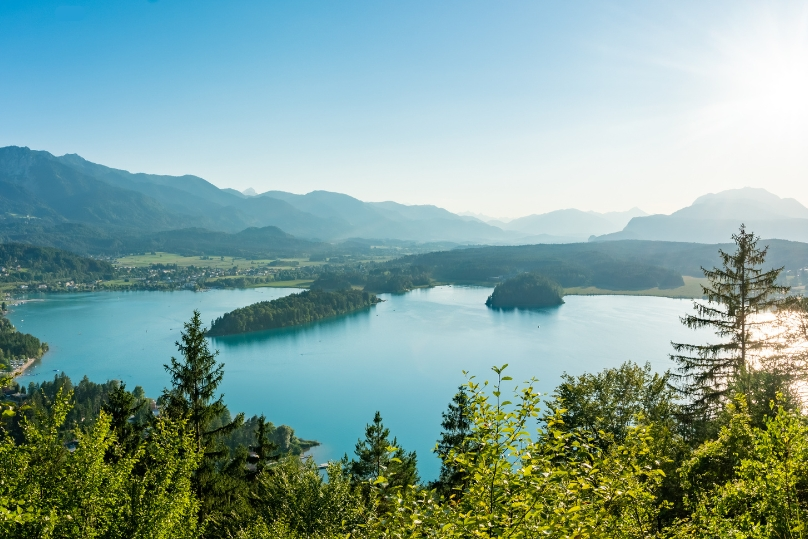
Rare photographs truly capture the colour of Lake Wörthersee. Known for its exceptionally clear water and distinctive turquoise hue, the lake remains one of Austria's most popular summer destinations. Nevertheless, seeing it live is a completely different experience.
The excursion covered several locations around the lake, showcasing a blend of the area's natural beauty, sophisticated tourist infrastructure, and a relaxed way of life. Elegant lakeside promenades, well-maintained public spaces, waterfront cafes, and historic villas create an atmosphere that feels distinctly Mediterranean, despite being firmly rooted in Austria. A boat trip on the lake offered a different perspective, revealing the dramatic mountain backdrop that frames the region. The tranquil waters, pleasant weather, and picturesque surroundings highlighted why Wörthersee continues to draw visitors from all over Europe.
Many participants were impressed by the balance between development and nature conservation. Although the region offers excellent tourist infrastructure, it has retained a strong sense of authenticity and environmental care.
Discovering Rosental Valley
The excursion also introduced participants to the Rosental Valley, a region that offers a more tranquil and traditional side of Carinthia. Here, tourism is closely linked with local culture, agriculture, and outdoor recreation. The landscape of rolling meadows, forests, and mountain vistas provides countless opportunities for hiking, cycling, and slow travel experiences. .
For international tour operators, the combination of Wörthersee and Rosental represents an extremely marketable product. Travellers can enjoy lively lakeside resorts and authentic rural experiences within close proximity of each other.
Evening on Lake Ossiach
The day concluded with a networking event and dinner at CMA Stift Ossiach, beautifully situated on the shores of Lake Ossiach.
The historic setting provided an unforgettable backdrop for discussions with tourism partners and destination representatives. As daylight slowly faded over the lake, participants reflected on a programme that had successfully showcased the breadth and quality of Carinthia's tourism offering. The evening once again reinforced the key message that has run through the entire study trip: Austria excels at combining top-tier tourist infrastructure with authentic local experiences.
Villach: The perfect farewell
On the final morning, a guided walk through the old town of Villach provided a fitting end to the journey.
The city embodies many qualities that define southern Austria: hospitality, a rich history, and a way of life shaped by its unique position between Alpine and Adriatic influences. Colourful facades, lively squares and pedestrian-friendly streets create an inviting atmosphere, while the surrounding lakes and mountains ensure that nature is never far away.
More than just a study trip
Looking back, the programme achieved much more than just showcasing attractions.
He showed how modern Austria successfully responds to ever-evolving travel trends. Sustainability, experiential tourism, gastronomy, wellness, authentic local encounters and efficient public transport are no longer separate products, but interconnected elements of a coherent visitor experience. The combination of Graz, Thermen und Vulkanland, Villach, Wörthersee and Rosental offers exceptional potential for international travellers seeking more than just classic sightseeing.
Equally important was played by Austrian Federal Railways and exceptional Austrian rail infrastructure. The ability to move quickly, comfortably, and sustainably between regions significantly enhances the visitor experience and creates opportunities for multi-destination itineraries that would have been considerably more impractical in the past.
For tourism professionals, the study tour provided invaluable product knowledge and countless ideas for future itineraries. For participants, it offered something even more memorable: a reminder that some of Europe's most rewarding travel experiences are still waiting to be discovered off the beaten track.
Southern Austria may not always dominate the front pages of travel media, but after three days of exceptional hospitality, incredible flavours, inspiring landscapes and meaningful connections, it is clear that it deserves far more attention than it currently receives.


