




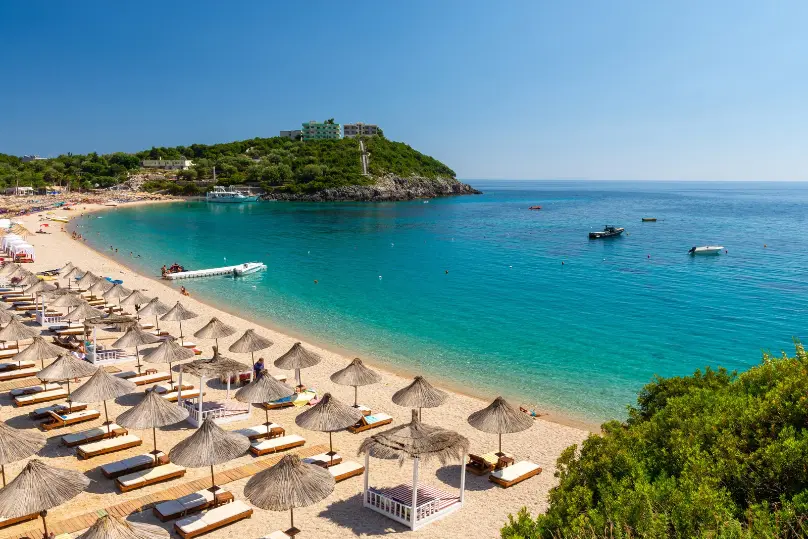
The short-term rental market in Albania is experiencing strong growth
The short-term rental market in Albania continues to rise, driven by increasing tourist demand which is pushing up both occupancy rates and accommodation prices.
In June 2026, approximately 284,300 overnight stays were recorded, representing an increase of 23 % compared to the same month in 2025. At the same time, the number of available properties rose by 9.3 %, reaching 31,600 accommodation units. Higher demand also pushed up the average occupancy rate to 60 % (compared to 55 % a year earlier), while the average price per overnight stay increased by 5.5 %, reaching 65.85 euros.
The upward trend is comprehensive: within a year, the number of booked nights increased by 18 %, and market revenue by 20 %, reaching 144 million euros. This turn of events is primarily linked to the habits of modern travellers who increasingly choose apartments and holiday homes instead of traditional hotels. At the same time, Albania recorded the largest increase in active short-term rental listings in the Balkans in 2025, confirming the rapid expansion of this sector.
Status of key tourism investments in the neighbourhood
Meanwhile, important changes are also on the horizon regarding two major projects with a significant impact on tourism in the neighbouring country
1. Vlorë International Airport (Valona)
Construction company MABCO Constructions challenged the Albanian government's decision on the early termination of the concession contract for the construction of Vlora International Airport and requested the initiation of negotiations to resolve the resulting dispute. The company calls the termination unfounded and points out that delays in the completion and commissioning of the airport were largely caused by the actions and omissions of the competent Albanian institutions.
They also reject the claim that the internal conflict among the partners in the consortium is exclusively a private matter, emphasising that it directly affects the implementation of the concession, and thereby the public interest. MABCO state that they have taken concrete steps to improve the project, including cooperation with international companies on technical support, certification and the operational preparation of the airport. By means of their letter, they request that negotiations with the government precede any arbitration proceedings in order to find a solution that will enable the successful completion of the project.
2. Durrës Port Project
On the other hand, the withdrawal of Emirati investor Mohamed Alabbar from the project to renovate and modernise the port in Durrës represents a significant blow to the Albanian economy and the country's investment profile. The ambitious project envisaged the construction of a new commercial port in Porto Romano and a luxury marina in Durrës, accompanied by multi-billion-pound investments and strong development potential.
The cancellation of the tender and the departure of the investors could burden Albania with high damages, while simultaneously creating uncertainty about the future of the port itself, which represents a key trade hub in the country. Aside from the direct economic consequences, this development raises questions about the credibility of Albania's investment environment, given that the collapse of such a huge project could undermine the confidence of other foreign investors as well.
Albania finds itself at a historical turning point. While the private short-term rental sector is breaking records and confirming the country as the new star of Balkan tourism, megaprojects such as the Vlorë airport and the Durrës marina serve as a warning about the fragility of large state investments. For long-term success and the attraction of serious capital, Albania will need to demonstrate greater legal certainty and transparency. On the other hand, for investors and travellers alike, private accommodation remains a bright spot and a market full of untapped potential.


