




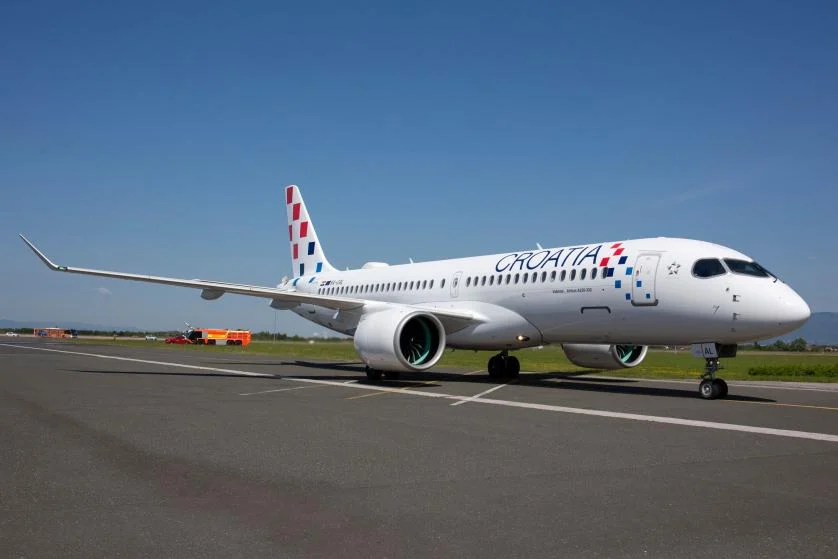
Croatia Airlines increased traffic by 15 percent
Croatia Airlines carried a record 981,482 passengers in the first six months of 2026. However, the stronger traffic was not enough to offset rising costs, unfavourable exchange rate differences, and the financial burden of introducing a new fleet.
Growth faster than the Croatian market
The national airline has increased its number of passengers by 15 per cent, or by almost 130,000 compared to the first half of 2025. International scheduled traffic increased by 18 per cent, while domestic routes recorded growth of six per cent.
The result is particularly interesting when compared to the overall Croatian aviation market. Domestic airports handled around 5.5 million passengers in the same period, a three per cent increase on the previous year. Croatia Airlines has therefore grown significantly faster than the market and increased its market share.
The company operated 12,631 flights, two percent more than last year. The load factor increased by 2.7 percentage points to 66.2 percent.
Higher income, but even faster cost growth
Business revenues rose 12 percent, and passenger transport revenues rose 11 percent. However, operating expenses increased 22 percent.
Croatia Airlines The first half of the year ended with an operating loss of €36.8 million. The total loss, after financing costs, reached €49.7 million. Negative exchange rate differences alone burdened it by approximately €13.6 million.
The greatest pressure was created by fuel, maintenance, airport and navigation services, and depreciation. IATA estimates that the average price of jet fuel in 2026 could reach $152 per barrel, almost 70 percent more than in 2025.
The A220 is changing the company's operational picture.
In the first half of the year, two new Airbus A220s were delivered, bringing the fleet to nine by the end of June. By the end of the year, the company expects a total of 14 out of the 15 contracted aircraft of this type.
A unified fleet should, in the long term, reduce fuel consumption, simplify maintenance, and facilitate capacity planning. However, the transition period brings parallel costs for new and old aircraft, employee training, and additional risks associated with delivery delays and parts shortages.
For the tourism market, the increase in passenger numbers confirms the importance of a domestic carrier for Croatia's connectivity. However, the weakening demand in June shows that greater capacity alone will not be sufficient. The key will be how quickly Croatia Airlines can stabilise costs and turn new aircraft into a sustainably profitable network.


