

Airfares in the EU rose 3.1% in June, with differences between markets
European prices Air transport continue to grow after strong fluctuations during spring. International lines remain the main source of changes, whilst trends among Member States vary considerably.
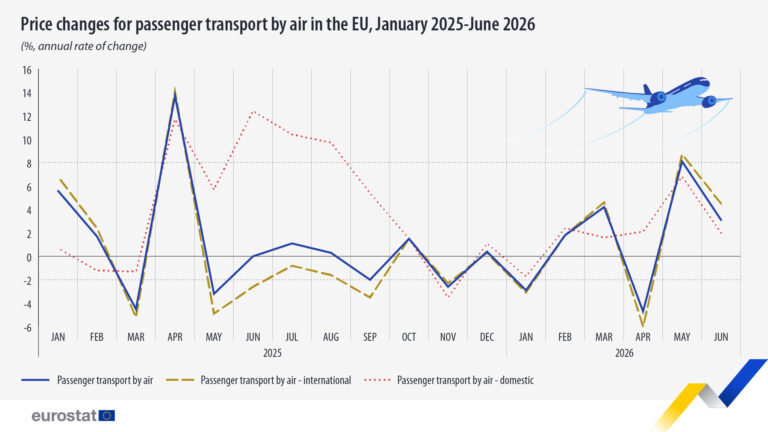
Air transport prices in the European Union in June were 3.1 percent higher than in the same month of 2025, new Eurostat data show. The increase is markedly milder than in May, when prices rose by 8.1 percent, but confirms that the market has returned to positive territory after a fall of 4.7 percent in April.
Such movement shows how sensitive airfares are at present to seasonality, demand and geopolitical disruptions. The largest annual increase in the period under review was recorded as far back as April 2025, when air transport services rose by 13.7 per cent.
International flights are more strongly lifting the average
International routes remain the main source of volatility. Their prices rose by 4.5 percent year-on-year in June, while domestic air transport became 2 percent more expensive.
For travel agencies and TMCs, this means that the average European indicator is not enough to adequately reflect the actual costs of an individual trip. The final price increasingly depends on the route, the timing of the booking, the carrier's capacity, and a specific market's exposure to international traffic.
Additional pressure is coming from fuel costs. In early June, the IATA estimated that the average price of jet fuel in 2026 could be 70 per cent higher than a year earlier, which would increase airlines' total fuel bill by around $100 billion. Meanwhile, the sector's net profit is expected to be halved compared to 2025.
Belgium's prices have soared, Slovakia is heading in the opposite direction
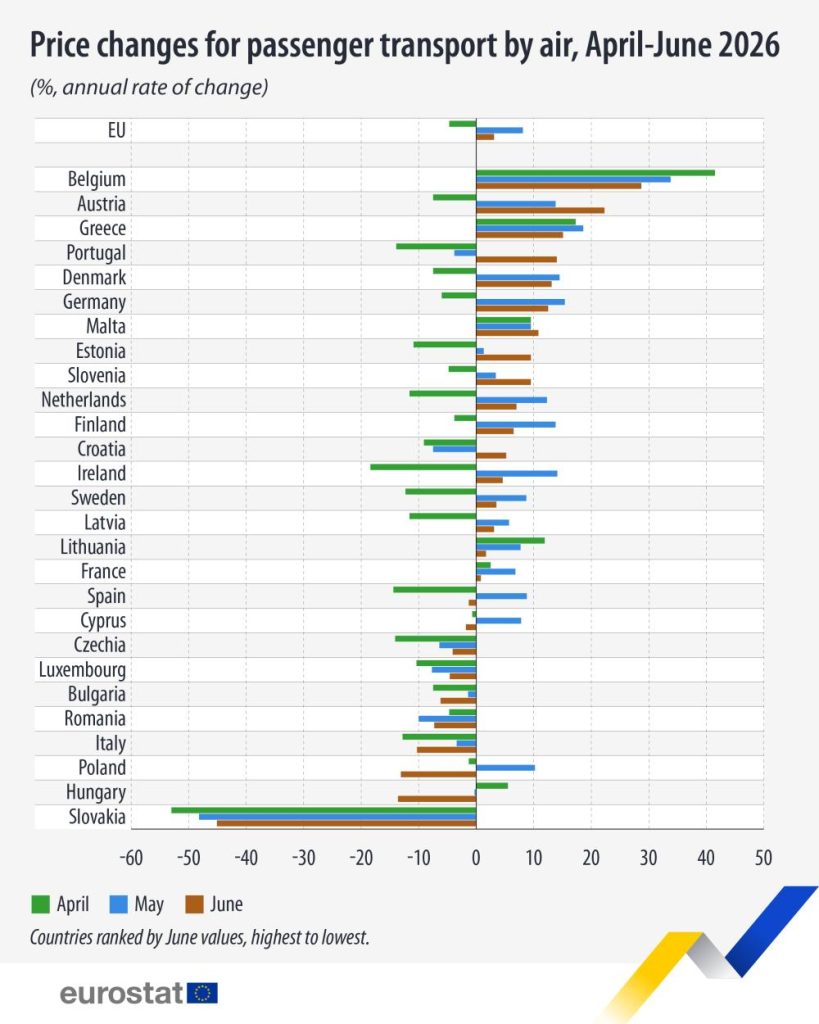
The differences between countries are even more pronounced than the overall European trend. In Belgium, prices rose by 28.7 percent in June, following a rise of over 40 percent in April. Austria recorded a rise of 22.3 percent, and Greece 15.1 percent.
On the other hand, prices in Slovakia fell by 45.1 per cent. A decline was also recorded in Hungary, at 13.6 per cent, and in Poland, at 13.1 per cent.
Planning a trip is becoming more demanding.
For the travel industry, the key message is not just that fares are rising, but that they are becoming less predictable. Agencies will therefore need to monitor individual markets more closely and secure capacity earlier, especially for international and business travel. A single trend for the whole EU is becoming increasingly unhelpful as a basis for budgeting.
SOURCE: Eurostat


