




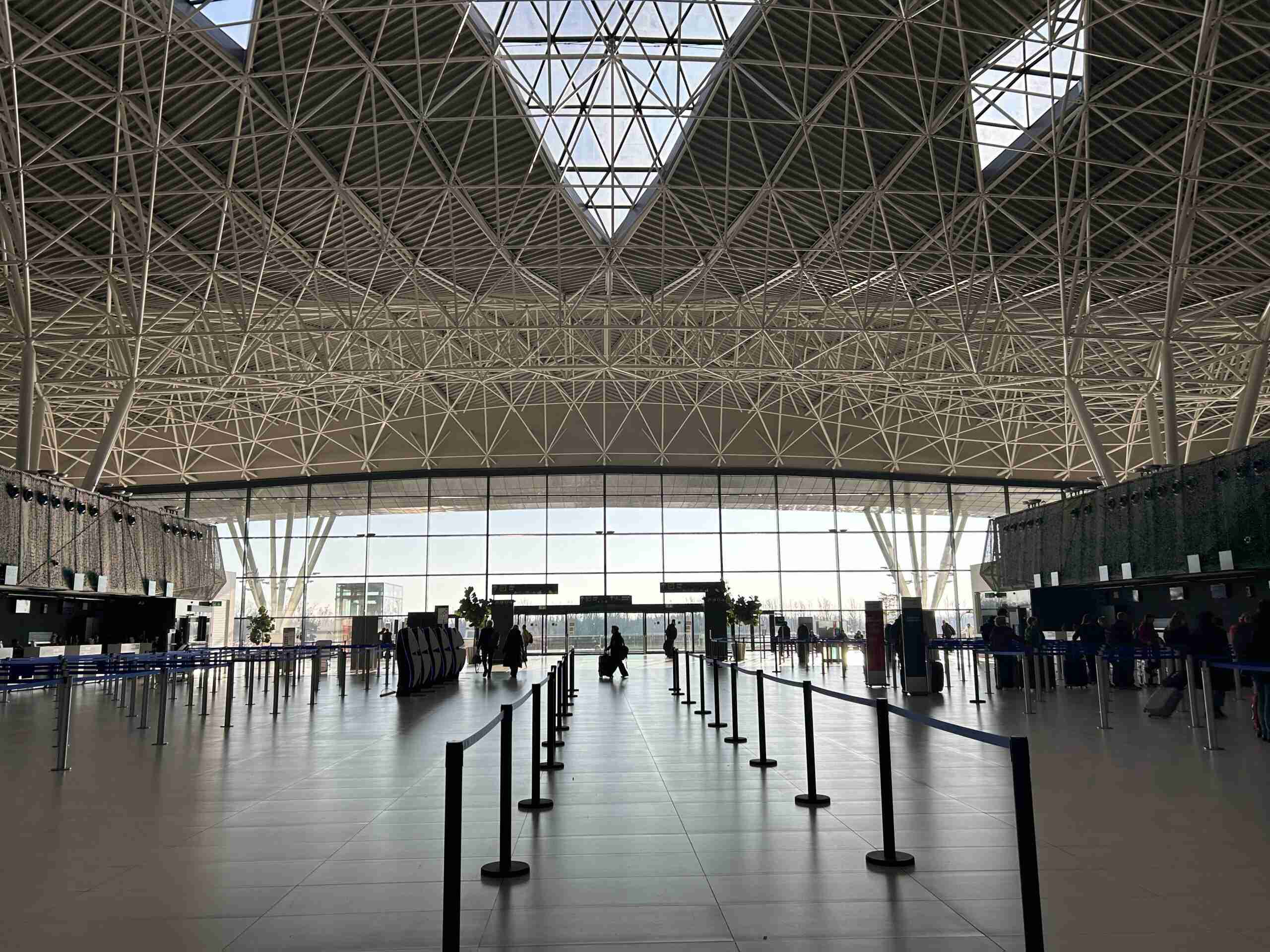
Zagreb Airport after the departure of British Airways and Austrian Airlines: direct connections remain, but growth has stalled.
Zagreb International Airport says that no market affected by the announced cuts will be left without a direct flight and does not expect a drop in traffic in 2027. This year's figures and what the press release omits show that the picture is more complex.
On Monday, 23 November, Zagreb Airport once again commented on the departure of British Airways and Austrian Airlines and on the reduction of flights by other carriers. The statement, carried by Index.hr, acknowledges that such news is not good for the airport but emphasises that the loss of an airline does not mean the loss of a destination.
Which airlines are leaving, and which are reducing flights?
British Airways has withdrawn all six weekly London Heathrow – Zagreb flights scheduled for summer 2027 from sale, citing that it regularly adjusts its network according to seasonality and demand. The route had been seasonal only since winter 2025/2026. In Croatia, British Airways is retaining Dubrovnik and Split, introducing an Edinburgh–Split route in May and plans up to 34 weekly flights at peak season.
Austrian Airlines will operate its last flight from Vienna to Zagreb on 10 January 2027, after more than four decades. It had been reducing its service since the end of 2024, from a former twelve weekly flights to one daily, without providing an official reason. According to tportal and Index, Iberia and Qatar Airways are reducing the number of flights to Madrid and Doha, and some carriers have abandoned planned capacity increases.
The last flight from Vienna to Zagreb after more than four decades
All six weekly flights between London Heathrow and Zagreb have been cancelled.
Fewer flights to Madrid and Doha, according to tportal and Index.
What does the airport say?
The key message of the press release is the difference between a carrier's withdrawal and the termination of a connection. According to the currently published flight schedules, all affected markets remain directly connected to Zagreb. The airport states that carriers arrange their networks according to demand, profitability, aircraft availability and their own strategic priorities. Meanwhile, the European industry is burdened by higher fuel and operating costs, delayed aircraft deliveries and geopolitical uncertainty.
For this year, the airport expects around 4.8 million passengers, compared to approximately 3.4 million before the pandemic. Based on available information, it does not expect traffic in 2027 to fall below 2026 levels, with the caveat that summer flight schedules have not yet been finalised. It is in negotiations with existing and potential carriers about new routes, the return of flights and increased frequencies, and will only announce new destinations once they have been confirmed by the airlines. The next phase of the development programme begins in 2027 and includes preparatory, technical and planning activities to increase capacity.
Formally correct, but not the whole picture.
The claim about direct connections holds true. Croatia Airlines continues to fly to Heathrow and Ryanair to Stansted, and Croatia Airlines to Vienna, with two daily flights planned for the winter. However, a direct connection is not the same as the service that was previously available. Only one carrier from Zagreb will remain at Heathrow, and only one on the route to Vienna. Fewer carriers on the same route usually means fewer flight times, fares and connection options, and the press release makes no mention of this.
Croatia Airlines (Heathrow)
Ryanair (Stansted)
Ryanair (Stansted)
Croatia Airlines
The traffic figures are not as reassuring as a record year might sound. The airport handled a record 4.72 million passengers in 2025. According to data published by Index, in the first ten months of 2026 growth fell to 0.6%, and every month from July to October was weaker than the year before. The expected 4.8 million represents a growth of approximately 1.7%, and the target for 2027 is to maintain that level, not to grow.
The press release does not mention the increase in airport charges that came into effect on 1 June. Index had previously reported that certain charges had risen by between 10 and 24 per cent and that Zagreb is more expensive than most competing airports in the region, with the exception of Budapest. So far, there is no evidence that the charges were a decisive factor in the decisions of British Airways or Austrian Airlines. For carriers that build their networks according to route profitability, as the airport itself notes, the cost per passenger is nevertheless one of the factors.
The development announcement requires caution in interpretation. According to the concession agreement described by Index, the concessionaire must initiate the terminal expansion once annual passenger traffic reaches five million. The phase announced for 2027 relates to preparatory activities rather than construction work. The airport has not commented on Index's unofficial information that the concessionaire is considering reopening the old Pleso terminal for low-cost carriers.
What does this mean for agencies and hoteliers?
From summer 2027, business travel agencies will no longer be able to offer connections to the British Airways network at Heathrow on a single ticket from Zagreb. Alternatives are Croatia Airlines to Heathrow, connections via other European hubs or separate tickets. For transfers in Vienna, the only carrier becomes Croatia Airlines, which in the first nine months of this year recorded a net loss of 64.7 million euros. Customers with British Airways bookings for summer 2027 should be informed about refunds or changing their booking.
Zagreb hoteliers and conference organisers depend on two carriers whose decisions the airport cannot control. Croatia's winter connectivity, according to this year’s overview of the winter flight schedule, is extensive, but the growth is increasingly concentrated on the coast. For group and MICE arrivals in 2027, it is safer to plan with routes already on sale rather than with announced negotiations, until carriers officially confirm the new flights.