



Places you will love – story by Sirma Ivanova
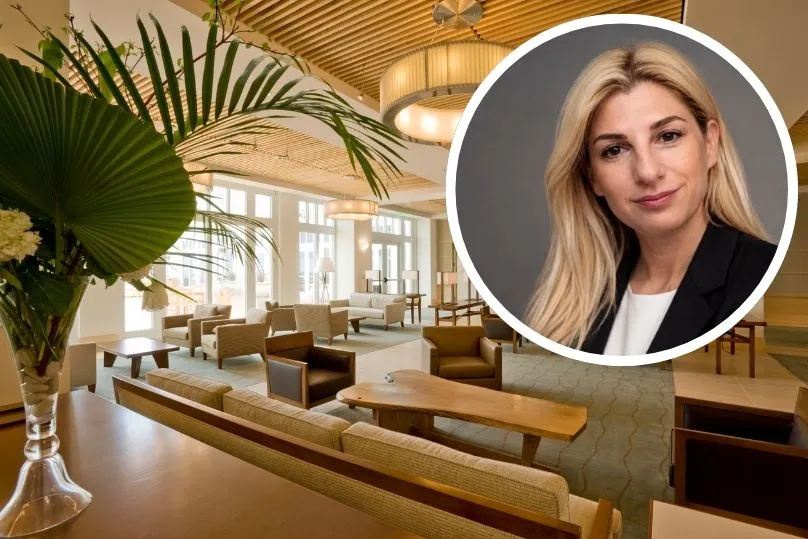
Sirma Ivanova is an internationally recognised hospitality expert, consultant and author with more than two decades of experience in tourism and hotel management. Throughout her career, she has worked with hotels across three continents, specialising in hotel distribution, revenue management, online reputation and guest experience strategy. She is the founder of the consulting firm Highlights HCT and the travel and hospitality project. Places You Will Love. Most recently, she was appointed as an advisor to Bulgaria's Minister of Tourism.
In her guest article for Tragento, Ivanova outlines Seven Guiding Principles of Modern Hospitality, arguing that a hotel's success can no longer be measured solely by occupancy rates or revenue. Instead, she highlights a more sustainable approach, one that places guests, employees, authenticity, transparent pricing, and the intelligent use of data at the heart of hotel operations.
Addressing hoteliers across the region, Ivanova explains that in an increasingly competitive global marketplace, lasting differentiation comes from creating memorable guest experiences that inspire visitors to recommend a property, return again, and build lasting loyalty.
A love story between a hotel guest and a hotel
Written for SEE hoteliers managing the season ahead
How does the guest's love appear? What provokes it? Why do we need the guest’s love? And how can we keep it?
I have worked with hundreds of hotels throughout my career, holding thousands of meetings over the past 20 years. What I have experienced and learned is that consistent guest love does not happen by chance. It needs good soil to be rooted in, good intentions to water it, and sincere care to help it grow – all of which require consistent effort. But it should not sound difficult or tedious, because hospitality is, by nature, about winning the guests' love.
We don’t live in times where we compete for the guest’s attention, or the guest’s booking, or the guest’s money – we are on a quest for the guest’s love. But why is that? When things change so dramatically that hard business logic leads us nowhere, and hard pushing on sales brings more disappointment than joy.
We work in the most lovable of all industries – we have the chance to handle guests' happiness. Because a guest's stay is not a room-night but a tiny part of their lives, of their hope for happiness. We have all been to a hotel we loved. What was extraordinary there?
I bet you'll say the people. I bet you'll pay attention to your needs – not just wishes, but sensing your wish before you know it. You feel at the centre of all operations; there is nothing more important in that very moment than you. I bet it is the care for their people and community, the environment, and a thought for a good future for everyone. I bet you sensed a glimpse of purpose or mission – they know why they exist as a business beyond profit. I bet their online presence was true and fair – they didn't trick you into making a booking by exaggerating the facilities or the size of the room. I bet what you expected was there… and a bit more. A small surprise. A little gesture to make your day better and enjoy your life a bit more. I bet the pricing was fair – you didn't feel cheated or manipulated – you knew exactly why you paid the price you did and didn't feel tricked by some revenue management algorithm.
Right then, These are the 7 principles of modern hoteliers. Follow them and be ready for the complex and exciting times of a hotel stay as an experience ahead. Or move on and meet the future with the old instruments – a real estate-based model – where guests simply have to stay somewhere.
Not all of these principles are new. They are simple truths. Not some out-of-touch philosophy – nevertheless, they are not easy to protect in the heat of the season or when temporary profits are the goal. These principles are like a guiding lighthouse on a foggy night. Which investment is right right now? Should I change the PMS or implement this new AI tool? Should I use the RMS or the ORM system? Will it help me ease my work and my team's workload?
Here are the steps to help your hotel become a place that people will love and want to return to.
A note for hoteliers across Southeast Europe: Why these principles matter right now
The hospitality industry across Southeast Europe is at a pivotal moment. From the Adriatic coast and alpine resorts to vibrant capital cities and emerging wine regions, the region has become one of Europe's most compelling tourism destinations. International hotel brands are accelerating their expansion, luxury collections are adding landmark properties, and global operators are actively searching for their next flagship hotels across Croatia, Slovenia, Serbia, Montenegro, Albania, North Macedonia, Bosnia and Herzegovina, Romania, Bulgaria, and Greece.
This is both an opportunity and a warning.
The independent hotelier, the family-owned seaside retreat, the boutique city hotel, the mountain lodge, the heritage estate, or the design-forward lifestyle property, is entering an era of unprecedented competitive pressure. The competition is no longer limited to neighbouring hotels. It now includes well-capitalised international brands that arrive with sophisticated operating systems, powerful loyalty programmes, advanced revenue management, and global marketing engines that few independent properties can hope to match.
At the same time, the external environment has become increasingly unpredictable. Inflation, rising operating costs, labour shortages, geopolitical uncertainty and changing travel patterns are reshaping the hospitality landscape. Guests have more choice than ever before, expectations continue to rise, and simply being located in a beautiful destination is no longer enough to guarantee success.
The era of automatic growth is over. The era of intentional differentiation has begun.
Yet independent hotels across Southeast Europe possess something that no global brand can manufacture: genuine authenticity. They embody the culture, traditions, people and stories of their destinations. They offer local knowledge, personal relationships and experiences that cannot be standardised or replicated by a global chain. They create memories rooted in place rather than in brand guidelines.
That authenticity is no longer just a charming advantage, it is a strategic asset.
Customer loyalty is not a bonus. For independent hotels across Southeast Europe, it is the competitive moat that protects long-term profitability, strengthens reputation, and builds resilience against increasingly powerful competitors.
The 7 principles of modern hoteliers Provide a practical framework for building, strengthening and protecting that moat. Together, they offer a roadmap for creating hotels that guests don't merely visit, but remember, recommend and return to.
Let us explore each principle.
1. Guest-centric
Put the guest at the centre – not the season, not the price, not the system.
Rising operating costs, labour shortages and increasingly unpredictable demand have made life more challenging for hoteliers across Southeast Europe. In difficult times, competing on price has never been a sustainable strategy. Discounting may fill rooms today, but it rarely builds a stronger business tomorrow. So what other tools do we have to remain competitive and attract the right guests?
Every hotelier understands the concept of guest-centricity. It has long been one of the defining principles of hospitality. But in practice, guest-centricity is often mistaken for expensive personalisation technology, AI-powered messaging platforms, or complex digital transformation projects.
In reality, being guest-centric begins somewhere much simpler. It starts with listening.
Guest satisfaction is already telling you where to improve: through reviews, surveys and direct feedback. This wealth of information is one of the most valuable strategic assets a hotel possesses, and it costs nothing to collect. Reverse-engineering guest feedback to improve the guest experience is one of the most practical and cost-effective ways to identify operational weaknesses, prioritise investments and create meaningful improvements.
Ask yourself a simple question: What is the biggest problem in your hotel today? Do you know the answer with certainty?
Is it housekeeping? Maintenance? Breakfast quality? Wi-Fi reliability? Staff responsiveness? Value for money? Which review categories consistently receive lower scores? Which complaints appear again and again across different booking channels? Hotels that systematically improve their weakest-performing areas often experience the greatest gains in guest satisfaction. The path from good to exceptional rarely begins by polishing your strengths, it begins by fixing your most noticeable weaknesses. If we are not using guest feedback to guide our decisions, what are we basing those decisions on? Why ignore the most honest, relevant, and actionable source of insight available, one freely provided by the very people we aim to serve?
Across Southeast Europe, digital reputation has become the new front door of every hotel. Whether guests discover a property through Booking.com, Expedia, Google, Airbnb, or another online travel platform, reviews shape first impressions long before a guest arrives at reception. A review score of 8.5 is not the same as 9.2. The difference influences visibility in search results, booking conversion, guest confidence, and ultimately the average daily rate a hotel can command. More often than not, that gap has little to do with the size of the rooms or the architecture of the building. It reflects consistency, service quality, operational excellence, and attention to detail.
Today’s travellers are informed, experienced, and discerning. Whether they are arriving from Germany, Austria, the United Kingdom, Scandinavia, North America, the Middle East, or from within the region itself, they compare dozens of properties before making a booking. They read reviews carefully. They notice thoughtful management responses. They recognise hotels that learn from criticism, and those that ignore it.
Putting the guest at the centre does not require the largest budget. It requires the discipline to listen, the humility to improve, and the commitment to act on what guests are already telling you.
The practical question
Sit down with your last 50 reviews. What is the single most repeated criticism? That is your priority. Not the website redesign. Not the new booking engine. Not the influencer campaign. Fix the thing your guests are already telling you is broken – and then tell them you've fixed it in your response to the next review that mentions it.
That is guest centricity in its most powerful and most affordable form.
Conclusion: Guest centricity is the starting point because it gives purpose to everything that follows. When you understand what your guests value most, every operational, commercial and strategic decision becomes more focused and more effective.
2. People first
Look after the people who look after the guests
There is a quiet crisis running beneath the surface of the hospitality sector across Southeast Europe, and it has been building for years. It is the growing shortage and migration of hospitality talent.
Seasonal employment, unpredictable schedules, rising living costs in tourism hotspots, wage competition from Western Europe and the perception that hospitality is a temporary job rather than a long-term profession have steadily pushed skilled people out of the industry. Every season, hoteliers across the region struggle to recruit and retain experienced staff. Many rely increasingly on international workers, operate with lean teams or ask existing employees to carry unsustainable workloads, bringing them dangerously close to burnout.
The reality is simple: you cannot create guest love with an exhausted team.
You cannot expect a housekeeper who has worked consecutive long shifts to notice that a guest looks anxious and offer a reassuring word. You cannot expect a front desk associate who has not had a proper day off in weeks to consistently deliver the warmth, empathy and spontaneity that transform a stay into a lasting memory.
An empty cup cannot fill another.
Your team's well-being is the invisible infrastructure that supports every exceptional guest experience. People First is not an employee wellness initiative or an annual team-building event. It is an operating philosophy. It recognises that investing in your people, their development, working environment, recognition, and sense of purpose, is one of the highest-return investments you can make in your guest experience.
The evidence is compelling. Hotels with engaged, supported and respected employees consistently achieve higher guest satisfaction, better online review scores, improved retention and stronger financial performance. This is no coincidence. Positive cultures are visible to guests. A team that genuinely enjoys where they work brings that energy into every interaction, creating experiences that cannot be scripted.
For independent hoteliers across Southeast Europe, People First also means challenging the traditional seasonal employment model wherever possible. The best people are looking for stability, growth and a future, not simply another summer contract. Small but meaningful actions can make a significant difference: extending contracts beyond the peak season, investing in training, providing accommodation or transport support, offering clear career progression, recognising outstanding performance and creating an environment where employees feel respected as professionals rather than treated as interchangeable labour.
In a region where talented hospitality professionals have unprecedented opportunities to work abroad, retaining great people is becoming one of the industry's most important competitive advantages.
The practical question
When was the last time you asked each member of your team, privately, not in a group meeting, one simple question: “What is one thing that would make your work life meaningfully better?”
The answer is rarely expensive. It is almost always achievable. More importantly, the act of asking, and then acting on what you hear, is itself a powerful demonstration of People First leadership.
Conclusion: The hotelier who invests in their team first builds a guest experience that no technology can replicate, and no competitor can easily copy.
3. Sustainable by Design
The art of endurance – sustainability as a competitive advantage, not a compliance exercise
The word sustainability has been stretched so thin across the hospitality industry that it risks losing its meaning. For many hotels, it has become little more than a checklist: LED lighting, eliminating single-use plastics, or placing a card in the bathroom asking guests to reuse their towels. That is not sustainability. It is the appearance of sustainability.
True sustainability, Sustainable by Design, is something much deeper. It is the deliberate decision to build a hotel business that is resilient enough to endure. To withstand seasonality, economic uncertainty, labour shortages, climate change, and the rising expectations of guests who increasingly choose where to stay based not only on price and location, but also on whether a business operates responsibly.
Across Southeast Europe, this principle has particular urgency.
The region's greatest competitive advantage is also its greatest responsibility. Its pristine coastlines, mountains, lakes, forests, vineyards, historic towns and cultural heritage attract millions of visitors every year. Yet many of these destinations are already experiencing the consequences of their own popularity. Congested historic centres, pressure on local infrastructure, water scarcity during peak seasons, fragile ecosystems and the gradual loss of local character are no longer future risks; they are present-day realities in many destinations across the region.
The hotelier who embraces Sustainable by Design is making a long-term commitment. They are saying: “We intend to be here in twenty years, and we understand that the decisions we make today will determine whether that future is possible.” That commitment takes many forms.
It means managing water responsibly, particularly in destinations where seasonal demand places immense pressure on limited resources. It means reducing food waste and building stronger relationships with local farmers, producers, wineries, fisheries and artisans, shortening supply chains while strengthening local economies. It means investing in renewable energy, efficient heating and cooling systems, intelligent building management and technologies that reduce resource consumption without compromising guest comfort.
It also means supporting the communities that make destinations worth visiting in the first place. Sustainable tourism is not simply about protecting nature; it is about ensuring that tourism creates lasting value for local residents rather than extracting it.
Sustainability is not only an ethical responsibility. It is increasingly a commercial advantage.
Travellers across Europe are becoming more discerning about the environmental and social impact of their travel choices. Visitors from key source markets, including Germany, Austria, the Netherlands, Switzerland, the Nordic countries, the United Kingdom, and France are placing greater value on hotels that demonstrate genuine environmental stewardship and responsible business practices. Certifications such as Green Key, Travelife, and other internationally recognised sustainability standards are rapidly evolving from differentiators into expected signals of credibility. More importantly, guests are becoming increasingly adept at distinguishing genuine commitment from superficial marketing. They reward authenticity, measurable action, and transparency, not vague promises or greenwashing.
Sustainability is not an expense to be minimised.
It is an investment in resilience, reputation, and long-term competitiveness.
The practical question
What is the single greatest environmental pressure point in your operation – energy, water, food waste, transport? Choose one. Commit to measurable improvement this season. Then tell your guests about it honestly – not as a marketing slogan, but as a real story about a real change. Authentic sustainability stories build deeper guest loyalty than any promotional campaign.
Conclusion: A hotel that is sustainable by design is more than just protecting the environment. It is protecting its own future.
4. Purpose-Driven
Define your hotel's 'Why' – and let it guide everything. Why does your hotel exist?
If your first instinct is to answer, “To provide accommodation” or “To generate revenue,” you are describing a function, not a purpose. Every hotel provides accommodation. Every business exists to generate revenue. Purpose answers a different question: Why does the world need your hotel?
Purpose is not a mission statement framed in the lobby. It is not a list of corporate values developed during a branding workshop. Purpose is the enduring belief that guides every decision your team makes, large and small, visible and invisible, every single day.
Imagine two boutique hotels in the same destination. They offer similar rooms, comparable amenities and almost identical prices. The first operates with flawless efficiency. Guests are checked in quickly. The rooms are spotless. Breakfast is plentiful. Every process works exactly as expected.
The second hotel exists for a different reason. Its owners believe their purpose is to help guests experience the true spirit of their destination. Everything flows from that belief.
The breakfast showcases ingredients sourced from nearby farms and producers. Guests receive handwritten recommendations for neighbourhoods, cafés, hiking trails, wineries or hidden beaches known mainly to locals. Local artists decorate the rooms. Family recipes are shared at dinner. A village guide leads walking tours that reveal stories visitors would never discover in a guidebook. Every experience reflects a genuine connection to a place rather than a standardised hospitality formula.
Which hotel will guests remember? Which one will inspire stories worth sharing? Which one will earn reviews that drive organic bookings? Which one will create a community of returning guests who recommend it to friends and family?
Across Southeast Europe, purpose is both the easiest and the most difficult of the Seven Principles.
It is easy because the region is extraordinarily rich in authentic stories. From the Adriatic coast to the Carpathian Mountains, from medieval towns and vibrant capitals to vineyards, monasteries, alpine villages, lakes and centuries-old traditions, Southeast Europe offers an abundance of culture, history, cuisine, craftsmanship and human connection. Every destination has a unique identity. Every community has stories that deserve to be shared.
The challenge is not finding purpose. The challenge is committing to it. Authenticity. Not as a performance designed for tourists. Not as carefully curated marketing. But as an honest expression of who you are, what your community values, and why your hotel exists beyond simply filling rooms.
Purpose creates clarity.
It shapes hiring decisions, partnerships, guest experiences, design choices, menus, events and even the way problems are solved. When everyone understands why the hotel exists, they no longer need detailed instructions for every situation. They can make decisions that naturally align with that purpose.
In an industry where facilities can be copied, technology can be purchased, and pricing can always be matched, purpose becomes one of the few advantages competitors cannot replicate.
Purpose isn't what you say about your hotel. It's what your team does when no one is looking.
The practical question
If every member of your team were asked, "Why does this hotel exist?", would their answers sound remarkably similar or completely different? If your purpose cannot be explained clearly in a single sentence, it is unlikely to guide daily decisions. If your guests cannot feel that purpose throughout their stay, it exists only on paper.
Conclusion: Purpose-driven hotels attract guests who share their values. And guests who share your values do not leave because a competitor offers a discount. They stay because they believe in what you are building.
5. Optimised channels
Look good online… but tell the truth.
Here is a test. Open your hotel’s page on Booking.com right now. Look at the photos. Read the description. Ask yourself: Does this honestly represent what a guest will experience when they walk through the door?
If the photos are from 2016, when the lobby was freshly renovated, and the lobby now looks different – that’s a problem. If the room description uses words like ‘stunning sea views’ for rooms that only offer partial sea views on a clear day, that’s a problem. If your breakfast photos show an abundant buffet and guests are currently arriving to find a smaller spread, that’s a problem.
Every inconsistency between what's promised online and what a guest experiences in person creates a disappointed customer. And disappointed customers write reviews. And reviews are currently the most powerful commercial force acting on your hotel – more powerful than your advertising budget, more powerful than your ranking on online travel agents, more powerful than any influencer campaign.
Channel optimisation isn't about looking better than you are. It's about representing yourself so accurately online that the guest who books you is exactly the guest who will love you. This sounds counterintuitive – shouldn't we try to appeal to as many people as possible? No. A hotel that tries to appeal to everyone appeals to no one in particular. The most successful independent hotels in Croatia and beyond have discovered that narrowing their appeal – speaking clearly to a specific kind of guest – generates more bookings, better reviews, and higher revenue than generic positioning.
This principle also covers the full ecosystem of your digital presence: your website, social media, Google Business profile, and your responses to reviews. In 2026, using TikTok Go, integrating travel bookings directly into social feeds and AI-driven search, changing how guests discover hotels, your digital presence is more important – and more complex – than ever before. But complexity should not mean inauthenticity. The fundamentals remain the same: be honest, be clear, be consistent, and ensure that what guests find online is what they will find in person.
The practical question
Ask someone who has never stayed at your hotel – a friend, a family member, someone from outside the industry – to browse your online presence for five minutes and then describe what kind of guest your hotel is for, what the experience will feel like, and what they would expect to pay. If their answers surprise you, you have work to do.
Conclusion: Optimised channels are not about manipulation. They are about truthfulness at scale – ensuring that the right guests find you, choose you, and arrive with expectations you can not only meet but exceed.
6. Transparent pricing
Fairness is the new loyalty.
When did pricing become so complicated that guests need a spreadsheet to understand why they paid what they paid?
The revenue management algorithms that now govern pricing across most hotels and OTAs have created a world in which two guests in identical rooms, booked on the same day, can pay wildly different rates – for no reason they can discern. Add mandatory resort fees, parking charges not disclosed at booking, breakfast sold separately at punitive prices, and the modern hotel pricing experience can feel less like hospitality and more like an adversarial game.
Guests notice. And guests remember. The feeling of having been tricked, even slightly, even legally, corrodes the foundation of the relationship you are trying to build. Transparent pricing does not mean charging every guest the same rate.
Dynamic pricing remains one of the most effective tools in modern revenue management, allowing hotels to respond intelligently to demand, seasonality, booking windows, and market conditions.
Transparency means something different.
It means that when a guest pays a price, they understand why. It means that every mandatory cost is clearly disclosed before the booking is completed. It means there are no unpleasant surprises at check-in or check-out.
And it means that guests who choose to book directly with your hotel receive genuine value for doing so. That value does not necessarily have to be a lower rate; it can be greater flexibility, added benefits, exclusive experiences, room upgrades or other meaningful advantages. What matters is that direct bookers feel recognised and rewarded, not disadvantaged compared with guests booking through online travel agencies (OTAs).
Across Southern Europe, transparency has become an increasingly important competitive differentiator.
Today's guests can compare hundreds of accommodation options in minutes—from international hotel brands and boutique properties to serviced apartments, holiday rentals and private villas. Digital platforms have made pricing more transparent than ever before, allowing travellers to compare not only rates but also cancellation policies, inclusions, taxes and perceived value with remarkable speed.
In this environment, trust becomes part of the product.
Hidden resort fees, unexpected parking charges, mandatory supplements or unclear pricing structures may generate short-term revenue, but they often create disappointment that far outweighs the financial gain. Guests rarely remember that your room was five per cent cheaper. They almost always remember feeling misled.
Transparency is therefore not simply a pricing strategy; it is a trust strategy.
Hotels that communicate openly about what is included, explain rate differences clearly, and make direct booking straightforward reduce friction throughout the guest journey. They also strengthen loyalty, increase repeat business, and encourage positive reviews, because guests feel they have been treated fairly. Ultimately, transparent pricing is about aligning expectations with reality.
When guests feel confident that the value they received matches the price they paid, they are far more likely to leave satisfied, even if they paid a premium.
Fair pricing is not a sacrifice of revenue. It is an investment in the guest’s trust – and trust is the most valuable asset a hotel can hold.
The practical question
Book your own hotel anonymously or ask someone you trust to do it. Go through the complete booking journey. Count every charge, every fee, every mandatory extra. Now ask: would you feel good about that experience as a guest? If the answer is anything less than yes, you know what to fix.
Conclusion: The hotel that prices with fairness builds a relationship with its guests. The hotel that prices with opacity builds a transaction. Relationships repeat. Transactions do not.
7. Data-informed decisions
See what the numbers can’t tell you and trust what they can.!
We are drowning in data and starving for insight.
The modern hotel has more data available to it than at any point in history: occupancy rates, RevPAR, booking window, channel mix, guest sentiment scores, review categories, competitor rates, weather forecasts, and event calendars. The tools for collecting and displaying this data are cheaper and more accessible than before. And yet, many hoteliers feel less confident in their decisions, not more.
The problem isn't a lack of data; it's the confusion between data-driven and data-informed.
Data-driven means letting the numbers make the decisions. Data-informed means using the numbers to sharpen your judgement, not replace it. A hotel that is exclusively data-driven will drop its prices when occupancy is low, raise them when demand is high, and optimise for short-term revenue metrics – often at the cost of the guest relationships and brand positioning that generate long-term value.
A data-informed hotel will look at the figures and then ask: What is the story behind this? Why is our breakfast score consistently lower than our room score? Why do guests from certain markets give higher satisfaction ratings than others? Why did our repeat guest rate drop this season, even though our overall rating improved? These are questions that data raises but cannot answer on its own. The answers require human judgement – and often, they require listening to your staff, who see the guest experience close up every day.
Croatia's hospitality industry is entering a period of major technological change. AI tools for pricing, revenue management, guest communication, and reputation monitoring are becoming more affordable and more capable. This is genuinely useful. But the hotelier who outsources their decision-making entirely to an algorithm is making a strategic mistake. Technology works best when it serves principles. It amplifies what you are already doing well, and it accelerates what you have already decided matters.
The practical question
Choose one number from your hotel data that you look at every week. Now ask: what decision has this number actually changed in the last three months? If the answer is ‘none’, that number is decoration, not intelligence. Find the number that would change your behaviour if it moved – and watch that one closely.
Conclusion: Hoteliers who are informed by data make better decisions not because they have more information, but because they know how to ask better questions of the information they have.
Places you will Love: A final word for hoteliers
The coming years will bring no shortage of challenges. Operating costs continue to rise. Labour shortages remain one of the industry’s greatest concerns. Economic uncertainty influences travel decisions, international hotel brands continue their expansion across the region, and today’s guests are more informed, more discerning, and more connected than at any point in history.
But there is another truth.
South-east Europe remains one of the world’s most remarkable tourism regions. From the Adriatic coastline and the Greek islands to the mountains of Slovenia, the vineyards of Serbia, the lakes of North Macedonia, the historic cities of Romania and Bulgaria, the dramatic landscapes of Montenegro and Albania, and the cultural richness woven throughout the region, South-east Europe offers something increasingly rare in modern tourism: authenticity. Its greatest assets are not its hotels.
They are its people, its traditions, its landscapes, its food, its history, and the unique sense of place that has evolved over centuries. No algorithm can manufacture those qualities. No international brand can import them. They belong to the communities that have shaped these destinations for generations. That is why independent hotels have a remarkable opportunity.
The seven principles in this book are not a guarantee of success. No framework can eliminate uncertainty or promise exceptional results. Hospitality will always remain a business of changing markets, changing expectations, and changing circumstances.
These principles are something more valuable. They are a way of thinking. A way of designing hotels that guests trust. A way of leading teams that people are proud to join. A way of building businesses that create value not only for owners, but also for employees, communities, and destinations. Most importantly, they are a reminder that a hotel is not simply a building with rooms.
It is a place where memories are made. Where celebrations begin. Where friendships deepen. Where families reconnect. Where journeys become stories that guests carry with them long after they return home. Technology will continue to evolve. Artificial intelligence will reshape operations. Distribution channels will change. Guest expectations will continue to rise.
However, one thing is unlikely to change. People will always remember how a place made them feel. That is the true competitive advantage of hospitality. And that is the opportunity before every independent hotelier across Southeast Europe. Not simply to build a successful hotel. But to create a place that guests remember, return to, and enthusiastically recommend to the people they care about most. That is the definition of a place you will love.
And building places like that, in all their complexity, authenticity, and humanity, is one of the most meaningful and rewarding challenges our industry has to offer.
Your hotel is not just a building. It is someone's cherished memory being formed. – Derived from Places You Will Love: The 7 Principles of Modern Hoteliers by Sirma Ivanova
Readers interested in exploring Sirma Ivanova’s vision for the future of hospitality can purchase Places You'll Love: The 7 Principles of Modern Hotel Keepers through the official Hotel Highlights website, where the book is available for order and additional information about its seven principles can be found.
Those who would like to follow Sirma’s work, stay updated on her latest insights, or connect professionally can do so via her LinkedIn profile, where she regularly shares perspectives on hotel strategy, guest experience, revenue management, tourism, and the evolving hospitality industry, while engaging with professionals from around the world. Sirma Ivanova’s profile is available at LinkedIn.


