




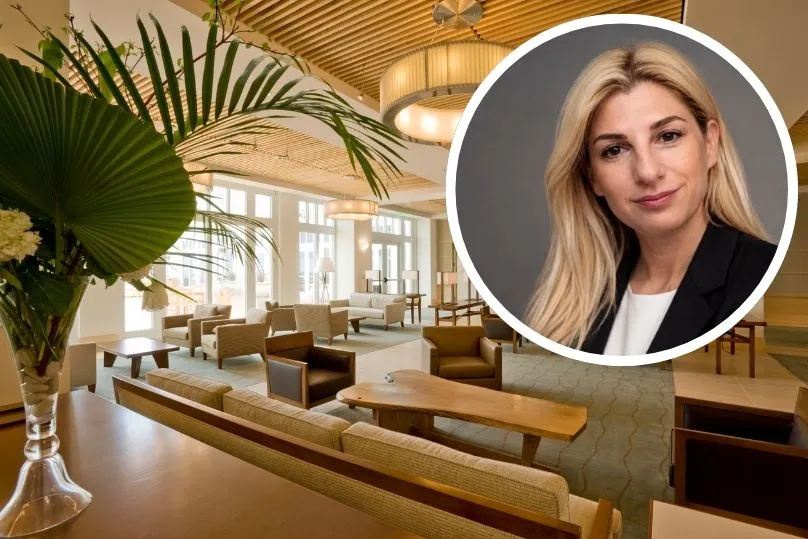
Places you will love – the story of Sirma Ivanova
Sirma Ivanova is an internationally recognised hospitality expert, consultant and author with over two decades of experience in tourism and hotel management. Throughout her career, she has worked with hotels on three continents, specialising in hotel distribution, revenue management, online reputation and guest experience strategy. She is the founder of the consultancy Highlights HCT and the travel and hospitality project Places You Will Love. She was recently appointed as an advisor to the Bulgarian Minister of Tourism.
In his guest article for Tragento, Ivanova outlines seven leading principles of modern hospitality, claiming that a hotel's success can no longer be solely measured by occupancy rates or revenue.. Instead, it highlights a more sustainable approach – one that places guests, employees, authenticity, transparent pricing, and the intelligent use of data at the heart of the hotel business..
Addressing hoteliers across the region, Ivanova explains that in an increasingly competitive global market environment, lasting differentiation comes from creating memorable guest experiences that encourage visitors to recommend the accommodation, return, and build lasting loyalty..
A love story between a guest and a hotel
Written with an eye on the upcoming season for Southeast European hoteliers
How does the guest love appear? What provokes it? Why do we need the guest's love? And how can we keep it?
I've worked with hundreds of hotels throughout my career, holding thousands of meetings over the last 20 years. What I have experienced and learned is that consistent guest love does not happen by chance. It needs good soil to be seated in, good intentions to water it, and sincere care to help it grow - all of which require consistent effort. But it should not sound difficult or tedious, because hospitality is, by nature, about winning the guests' love. We don't live in times where we compete for the guest's attention, or the guest's booking, or the guest's money - we are on a quest for the guest's love. But why is that? When things change so dramatically that hard business logic leads us nowhere, and hard pushing on sales brings more disappointment than joy.
Today, we're no longer just fighting for someone's attention, click, or wallet. We're on a far more exciting mission – we're seeking love. Why? Because the rules of the game have drastically changed. Cold business logic no longer yields results, and aggressive sales more often create disappointment than a smile.
We work in the most lovable of all industries - we have the chance to handle guests' happiness. Because a guest's stay is not a room/night but a tiny part of their lives, of their hope for happiness. We have all been to a hotel we loved. What was extraordinary there?
I bet you will say the people. I bet you will pay attention to your needs - not just wishes, but sensing your wish before you know it. You feel at the centre of all operations; there is nothing more important in that very moment than you. I bet it is the care for their people and community, the environment, and a thought for a good future for everybody. I bet you sensed a glimpse of purpose or mission - they know why they exist as a business aside from profit. I bet their online presence was true and fair - they did not trick you into making a booking, exaggerating the facilities or the size of the room. I bet what you expected was there… and a bit more. A small surprise. A little gesture to make your day better and enjoy your life a bit more. I bet the pricing was fair - you didn't feel cheated, manipulated - you knew exactly why you paid the price you paid and didn't feel tricked by some revenue management algorithm.
Not all of these principles are new. They are simple truths. Not some out-of-touch philosophy - nevertheless, they are not easy to protect in the heat of the season or when temporary profits are the goal. These principles are like an illuminating lighthouse in a foggy night. Which investment is right right now? Should I change the PMS or implement this new AI tool? Should I use the RMS or the ORM system? Will it help me ease my work and my team's workload?
Here are the steps to help your hotel become a place people will love and want to come back to.
A Note for hoteliers across Southeast Europe: Why these principles matter right now
The hospitality industry across Southeast Europe is at a pivotal moment. From the Adriatic coast and alpine resorts to vibrant capital cities and emerging wine regions, the region has become one of Europe's most compelling tourism destinations. International hotel brands are accelerating their expansion, luxury collections are adding landmark properties, and global operators are actively searching for their next flagship hotels across Croatia, Slovenia, Serbia, Montenegro, Albania, North Macedonia, Bosnia and Herzegovina, Romania, Bulgaria, and Greece. This is both an opportunity and a warning. The independent hotelier, the family-owned seaside retreat, the boutique city hotel, the mountain lodge, the heritage estate, or the design-forward lifestyle property, is entering an era of unprecedented competitive pressure. The competition is no longer limited to neighboring hotels. It now includes well-capitalized international brands that arrive with sophisticated operating systems, powerful loyalty programs, advanced revenue management, and global marketing engines that few independent properties can hope to match. At the same time, the external environment has become increasingly unpredictable. Inflation, rising operating costs, labor shortages, geopolitical uncertainty, and changing travel patterns are reshaping the hospitality landscape. Guests have more choice than ever before, expectations continue to rise, and simply being located in a beautiful destination is no longer enough to guarantee success.
The 7 principles of modern hoteliers provide a practical framework for building, strengthening, and protecting that moat. Together, they offer a roadmap for creating hotels that guests don't simply visit, they remember, recommend, and return to. Let us explore each principle.
Fortunately, small, independent hotels have a weapon that no global corporate giant can replicate: Authenticity. They are the living spirit of local culture, traditions, and stories that cannot be prescribed by corporate handbooks. It is precisely the guest's love that is the shield protecting profitability and building unbreakable resilience.
The 7 Principles of Modern Hoteliers provides a practical framework for building, strengthening, and preserving that wall. Together, they offer a roadmap for creating hotels that guests not only visit, but remember, recommend, and return to.
1. Guest-centric
Put the guest at the centre, not the season, price or system.
Rising operating costs, labor shortages, and increasingly unpredictable demand have made life more challenging for hoteliers across Southeast Europe. In difficult times, competing on price has never been a sustainable strategy. Discounting may fill rooms today, but it rarely builds a stronger business tomorrow. So what other tools do we have to remain competitive and attract the right guests? Every hotelier understands the concept of guest-centricity. It has long been one of hospitality's defining principles. But in practice, guest-centricity is often mistaken for expensive personalization technology, AI-powered messaging platforms, or complex digital transformation projects. In reality, being guest-centric starts somewhere much simpler. It starts with listening. Guest satisfaction is already telling you where to improve: through reviews, surveys, and direct feedback. This wealth of information is one of the most valuable strategic assets a hotel possesses, and it costs nothing to collect. Reverse-engineering guest feedback to improve the guest experience is one of the most practical and cost-effective ways to identify operational weaknesses, prioritize investments, and create meaningful improvements. Ask yourself a simple question: What is the biggest problem in your hotel today? Do you know the answer with certainty? Is it housekeeping? Maintenance? Breakfast quality? Wi-Fi reliability? Staff responsiveness? Value for money? Which review categories consistently receive lower scores? Which complaints appear again and again across different booking channels? Hotels that systematically improve their weakest-performing areas often experience the greatest gains in guest satisfaction. The path from good to exceptional rarely begins by polishing your strengths, it begins by fixing your most noticeable weaknesses. If we are not using guest feedback to guide our decisions, what are we basing those decisions on? Why ignore the most honest, relevant, and actionable source of insight available, one provided freely by the very people we aim to serve? Across Southeast Europe, digital reputation has become the new front door of every hotel. Whether guests discover a property through Booking.com, Expedia, Google, Airbnb, or another online travel platform, reviews shape first impressions long before a guest arrives at reception. A review score of 8.5 is not the same as 9.2. The difference influences visibility in search results, booking conversion, guest confidence, and ultimately the average daily rate a hotel can command. More often than not, that gap has little to do with the size of the rooms or the architecture of the building. It reflects consistency, service quality, operational excellence, and attention to detail. Today's travelers are informed, experienced, and discerning. Whether they are arriving from Germany, Austria, the United Kingdom, Scandinavia, North America, the Middle East, or from within the region itself, they compare dozens of properties before making a booking. They read reviews carefully. They notice thoughtful management responses. They recognize hotels that learn from criticism, and those that ignore it. Putting the guest at the center does not require the largest budget. It requires the discipline to listen, the humility to improve, and the commitment to act on what guests are already telling you.
In reality, a guest-centric approach starts with something much simpler. It starts with listening. Guest feedback is one of the most valuable strategic assets a hotel possesses, and collecting it costs nothing. Analysing reviews with the aim of improving the guest experience is one of the most practical ways to identify operational weaknesses and prioritise investments.
Practical question: Sit with your last 50 reviews. What is the single most repeated criticism? That is your priority. Not the website redesign. Not the new booking engine. Not the influencer campaign. Fix the thing your guests are already telling you is broken - and then tell them you fixed it in your response to the next review that mentions it. That is guest centricity in its most powerful and most affordable form. Conclusion: Guest centricity is the starting point because it gives purpose to everything that follows. When you understand what your guests value most, every operational, commercial, and strategic decision becomes more focused and more effective.
People first
Take care of the people who take care of the guests. Beneath the surface of hospitality in Southeastern Europe, a quiet crisis is simmering: a growing shortage and migration of quality staff. The simple truth is, you can’t create guest love with an exhausted team. An empty cup cannot refill another. Your team’s wellbeing is the invisible infrastructure supporting every exceptional guest experience.
Practical question: When was the last time you privately asked each member of your team a simple question: „What's one thing that would make your work life significantly better?“ The answer is rarely expensive, but it is incredibly powerful.
3. Sustainable by Design
The art of durability, sustainability as a competitive advantage, not mere regulatory compliance.
Genuine sustainable development means making a considered decision to build a resilient hotel business that can withstand seasonality, climate change, and growing guest expectations. Tourism in the region should bring lasting value to local residents, not just drain resources.
Practical question: What is the biggest environmental pressure point in your business – energy, water, food waste? Choose one, commit to a measurable improvement this season, and communicate this honestly with your guests.
4. Guided by purpose
Define your hotel's „why,“ and let it guide you in everything.
The purpose is not a mission statement framed in a lobby, but a lasting belief that guides every decision your team makes. When guests feel the hotel's genuine connection to the destination's tradition, culture, and identity, stories are created that are remembered and shared.
Practical question: If you asked every member of your team „Why does this hotel exist?“, would their answers sound similar or completely different?
5. Optimised channels
Look good online... but tell the truth.
Any inconsistency between the online promise and the on-site reality creates a disappointed guest, and disappointed guests write reviews that seal a hotel's fate. Accuracy, clarity, and consistency are key to attracting the right guests who will genuinely love your property.
Practical question: Ask someone who has never stayed at your hotel to review your online presence and describe what your hotel is like and what they can expect. If their answers surprise you, you have a problem.
6. Price transparency
Justice is the new loyalty.
Complex hidden costs and aggressive algorithms erode guest trust. Price transparency doesn't mean everyone pays the same, but that guests understand what they're paying for, that there are no hidden surprises, and that guests who book direct feel recognised and rewarded.
Practical question: Go through the entire process of booking your own hotel and pay attention to every additional charge. Would you feel comfortable as a guest?
7. Data-driven decisions
See what the numbers cannot tell you and trust what they can tell you!
There's a big difference between a „data-driven“ approach and one that is „data-informed“. Numbers provide guidance, but understanding the story behind them requires human judgment, intuition, and listening to employees who are in daily contact with guests.
Practical question: Select one number from your weekly hotel data and ask yourself: what decision has that number truly changed in the last three months?
Your hotel isn't just a building. It's a place where treasured memories are made. Technology will evolve, distribution channels will change, but one thing will likely never change: people will always remember how a place made them feel.
This is a true competitive advantage in hospitality. And it is an opportunity that stands before every independent hotelier in South-Eastern Europe: to create a place that guests remember, to which they return, and which they enthusiastically recommend to those they care about most.
Readers who wish to gain a closer insight into Sirma Ivanova's vision for the future of hotel management can purchase the book Places You'll Love: The 7 Principles of Modern Hotel Keepers official website Hotel Highlights, Where is the book available for order, along with additional information about the seven principles of contemporary hospitality.
Anyone wishing to follow Sirma Ivanova's work, stay up-to-date with her latest thoughts, or connect with her professionally can do so via her LinkedIn profile. There, she regularly shares expert insights on hotel strategy, guest experience, revenue management, tourism, and the development of the hotel industry, and actively communicates with professionals from around the world. Her LinkedIn profile is available at link.


