





Trending report: Skift Global Forum started in New York
Shift Global Forum 2026 It opened on 22 September in New York, and the first discussions have already highlighted the main theme of this year's event. Artificial intelligence in tourism is increasingly viewed less as a tool for chatbots and customer support, and more as a shift in focus towards distribution, bookings and the question of who will control the relationship with the traveller when the AI agent becomes their primary entry point to travel.
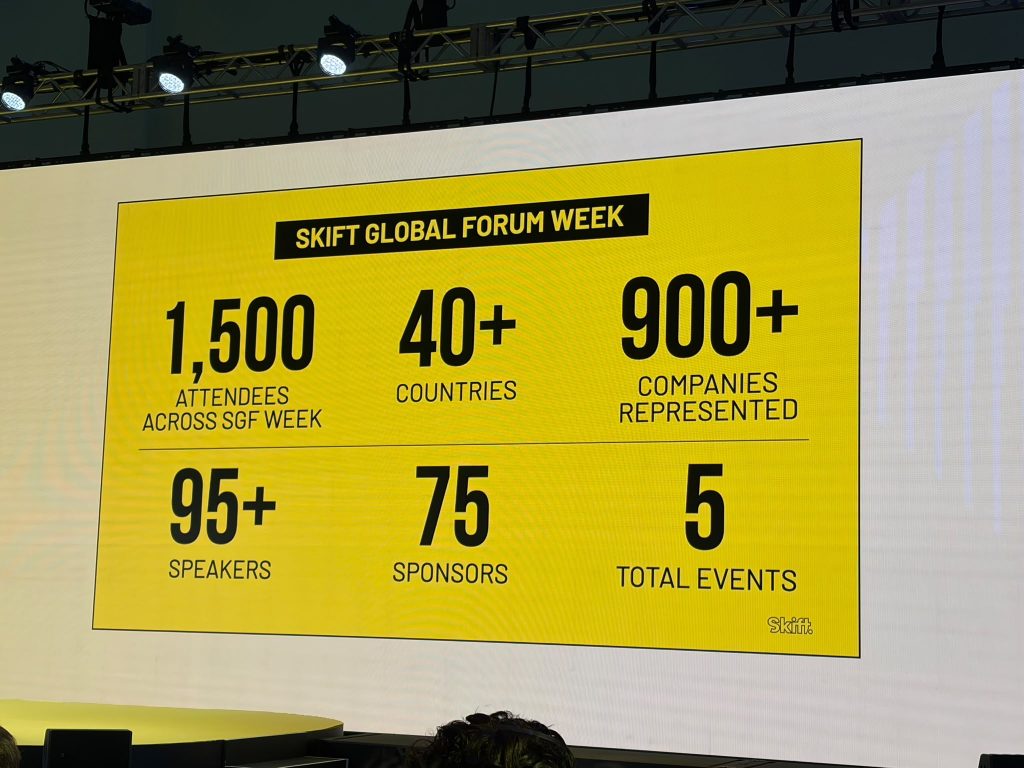
Forum on the topic “Travel's Great Recalibration” running until 24 September at the North Javits Center. Skift states that this year's event brings together 997 participants from 45 countries and 463 companies, with 72 percent of participants at director level or above.
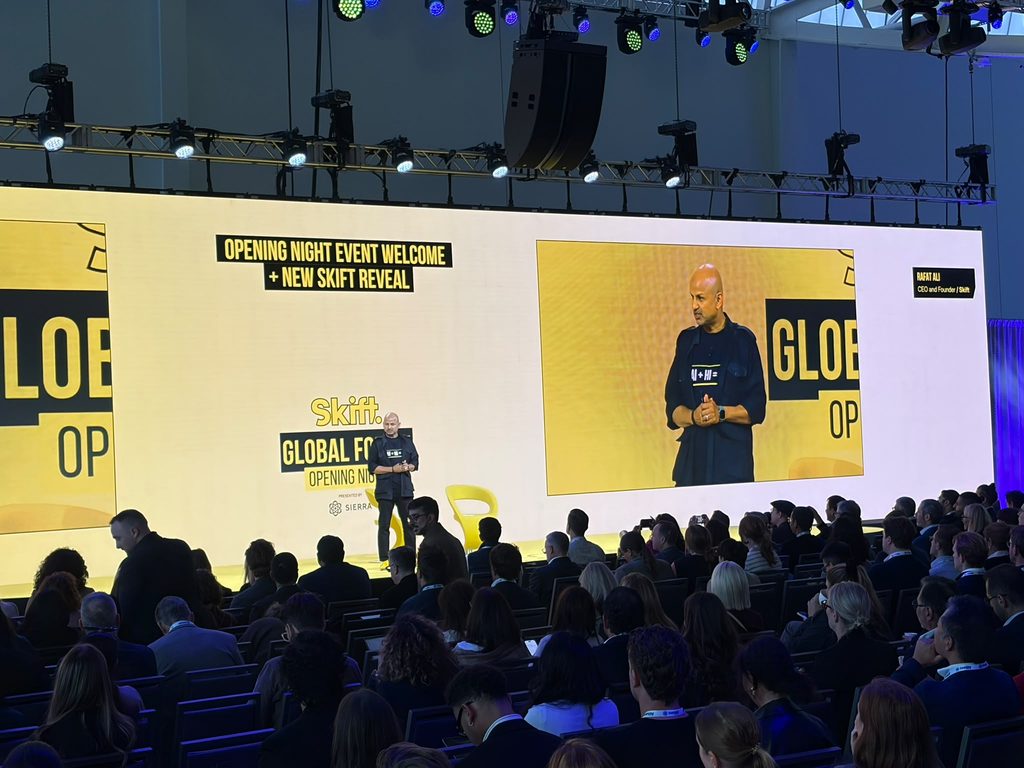
Uber wants a much bigger slice of the journey
One of the first concrete business news items was brought by Uber CEO Dara Khosrowshahi. In April, through a partnership with Expedia Group, Uber began offering hotel bookings within its app, and later this year it plans to add Vrbo short-term rentals. Flights have not been confirmed as yet, but the company is not ruling them out.
Of particular interest is the model by which Uber is entering hotel distribution. Khosrowshahi said that the company is currently running the hotel booking business practically on a break-even basis and is passing part of the potential margin back to Uber One members through discounts.
Uber One has more than 50 million members, and they, according to the data presented by Khosrowshahi, spend about three times more than other users. For Uber, therefore, a hotel does not have to be a separate profit centre. It can be a way to keep the user within the same ecosystem before, during and after the trip.
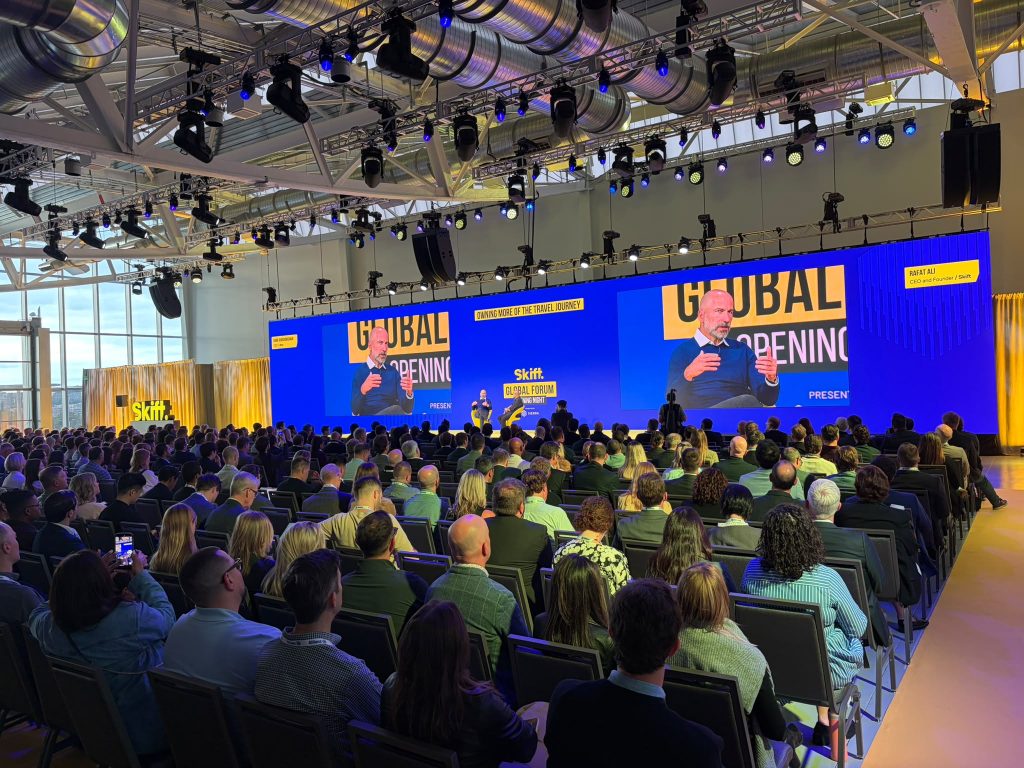
Sierra shows what the next step could look like
Immediately after Uber, Bret Taylor, co-founder of Sierra and chairman of the board of OpenAI, took to the stage. His talk was entitled “Understanding AI's Broad Impact”, and Sierra is also the opening partner of this year's Forum. Following Taylor, Glenn Fogel, president and CEO of Booking Holdings, performed.
That schedule accurately describes the moment the travel industry is in: between large platforms already controlling distribution and a new generation of AI agents that could change the way users even go about booking.
In recent months, Sierra has particularly stepped up its presence in the travel and hospitality segment. Its agents are designed for tasks such as flight cancellation rebooking, loyalty programme management, upselling and accommodation booking.
In one of the demonstrations published in July, Sierra shows an agent that, within a single conversation, compiles and books a flight, hotel and hire car. In another, the user books an entire flight by voice, including seat selection and payment. These are technology demonstrations for now, rather than proof that the entire market will shift to such a model, but they very clearly show the industry's ambition.
Booking and Expedia are already changing their AI strategies
Sierra is not an isolated case in this regard. Booking Holdings is experimenting with multiple AI products across its brands. Priceline's Penny is already being developed towards an agentic system, while Booking.com and Agoda are also working on their own planning tools.
Expedia Group took a somewhat different path. According to Skift, the company has abandoned the idea of a single, universal Romie chatbot and moved towards an architecture where multiple specialised AI agents cooperate on different parts of the trip. In the process, Expedia also acquired the AI-focused trip-planning startup Layla.
Because of this, the discussion about AI is no longer just technological. For Booking, Expedia, airlines, hotels, Uber and future AI platforms, it comes down to the same question: who will be the passenger's first point of contact and who will control the transaction that follows?
Hotels are preparing to even be found by AI
The change is especially important for hoteliers. Wyndham is already sending current rates and inventory to major AI models, while IHG is working on adapting content so that models can better understand the differences between individual hotels and recommend them for relevant traveller queries.
This also changes the existing SEO logic. A hotel will no longer need to be optimised solely for Google, Booking.com or its own website. Its prices, amenities, policies and availability will have to be structured well enough to be understood by AI agents acting on behalf of travellers.
If a traveller can soon simply say to an agent: “Find me four nights in Split, a seaside hotel, a direct flight from Frankfurt and an airport car,” competition will also be driven by whose inventory is available to the agent, how high quality the data is, and whether the agent can actually complete the booking.
Skift Global Forum continues this discussion with leaders from Expedia Group, Hilton, Airbnb, Booking Holdings, Wyndham and other major companies. This year's event therefore feels less like just another AI conference for now, and more like a debate on what the next phase of travel distribution will look like.


