


Slovenia is strengthening year-round tourism and mountain destinations
Slovenia achieved nearly 7.3 million overnight stays in the first half of the year, while June exceeded the two-million mark for the first time. However, more important than the record itself is the shift in the structure of demand – mountain regions and nature-related travel are growing the fastest.
Record June and stronger international demand
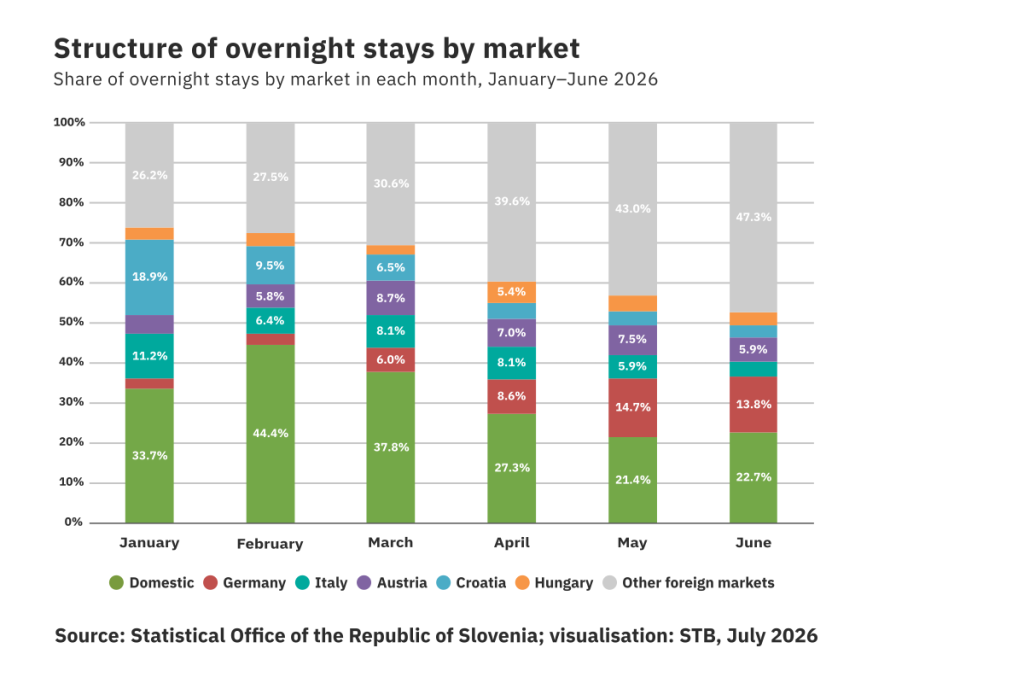
In Slovenian accommodation establishments from January to June 2026, 2.94 million arrivals were recorded, five percent more than in the same period last year. The number of overnight stays rose by 5.7 percent, to 7.28 million.
June brought 2,000,181 overnight stays, which is the best result for that month since records began. Foreign guests accounted for 71 percent of the total turnover, or nearly 5.2 million overnight stays. The most important markets remain Germany, Italy and Austria, while Ljubljana, Piran and Bled were the most visited municipalities.
Mountains are growing faster than the coast
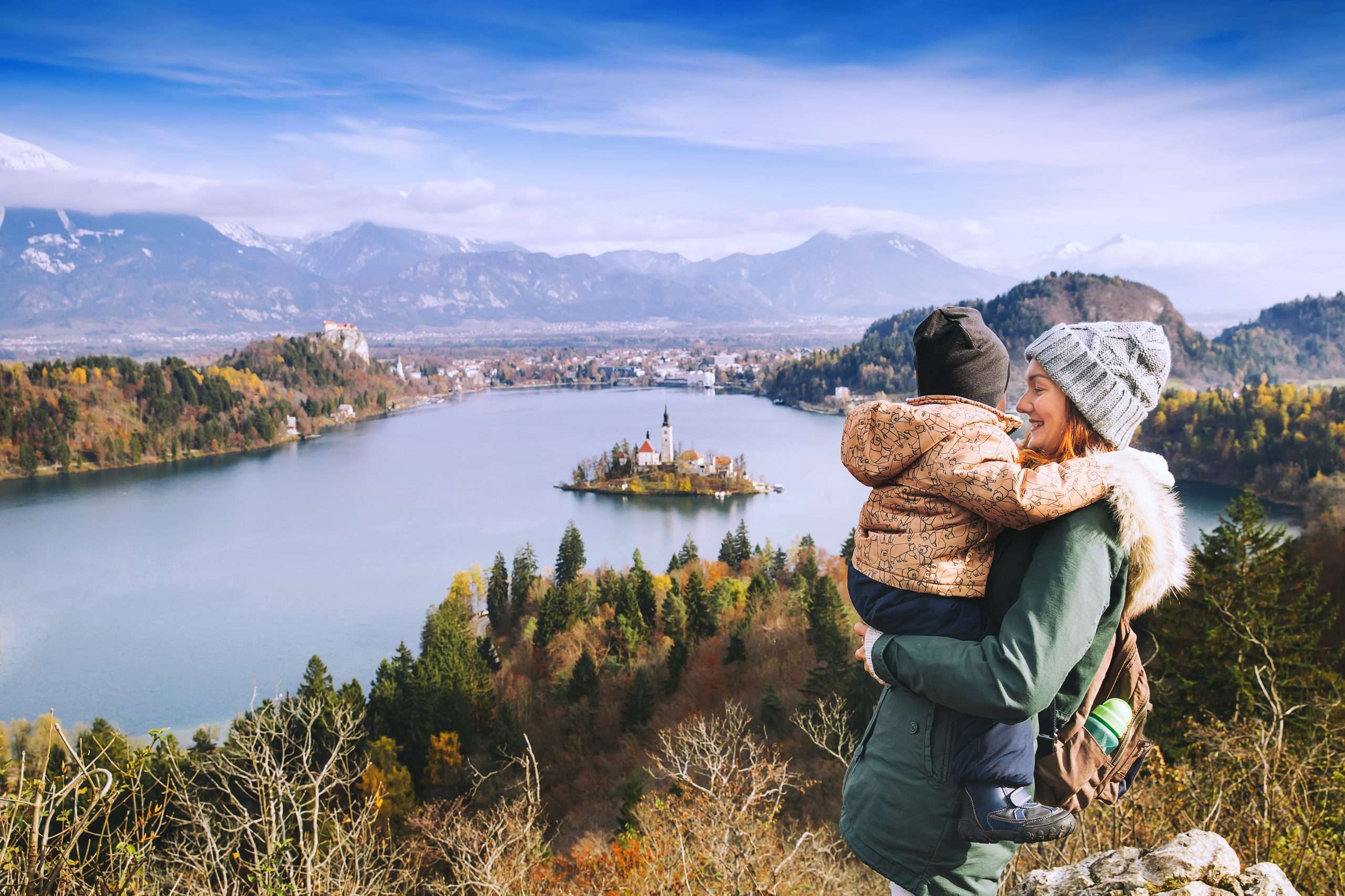
Mountain destinations achieved 2.14 million overnight stays in the first six months, a massive 11 percent more than the previous year. In June alone, they accounted for almost 731,000 overnight stays or 37 percent of the total result. The most sought-after were Bled, Bohinj and Kranjska Gora.
Simultaneously, growth in coastal municipalities was significantly more modest at 1.4 percent. Such a difference does not mean that the Slovenian coast is losing importance. However, it shows that summer demand is no longer automatically directed towards the sea. An increasing number of guests are choosing active holidays, lakes, forests and areas with more pleasant temperatures.
Year-round tourism demands more than good figures
Slovenian Tourist Board The growth of mountain regions is linked to the „coolcation“ travel trend, which involves choosing cooler and less crowded destinations during the summer. This is supported by a diverse range of offerings in a compact area, from the Alps and thermal springs to cities, karst landscapes and the coast.
The positive results are also accompanied by revenues. According to data from the Bank of Slovenia reported by the STA, the value of travel exports from January to May reached 1.17 billion euros, representing an annual growth of 6.2 per cent.
For tourism industry This is an encouraging direction, but also a signal for caution. A larger number of overnight stays still needs to be translated into a longer stay, higher spending and more stable business outside the main season. It is precisely the quality of the product and the connection between the mountains, thermal spas, cities and the coast that will show just how sustainable the Slovenian year-round model really is.


