



Red alert in Montenegrin tourism: Quantity is not quality!
Montenegro breaks tourism records, Beneath the surface, however, a dangerous imbalance is being created: prices are rising to Western European levels, while the quality of service is declining due to a lack of labour, inconsistent standards, and the absence of operating systems.
For travel agencies, tour operators and global partners, this creates a high-risk environment where the „value for money“ principle collapses and guest dissatisfaction becomes a structural threat. This article reveals the „red flags“ every tourism professional must understand – and offers a strategic solution for safe and profitable business in Montenegro.
Contents
- Red alert in Montenegrin tourism: Quantity is not quality!
- Why can't high prices and a drop in service quality coexist
- The three biggest risks currently facing Montenegro
- What do travel agencies need to do to protect their brand
- Practical examples: How to recognise reliable partners in Montenegro
- Pomaže agencijama da upravljaju visokorizičnim destinacijama tako što pruža sveobuhvatne alate i resurse za procjenu i ublažavanje rizika, osiguranje usklađenosti s propisima i pružanje podrške putnicima u neuobičajenim okolnostima.
- Conclusion

Introduction
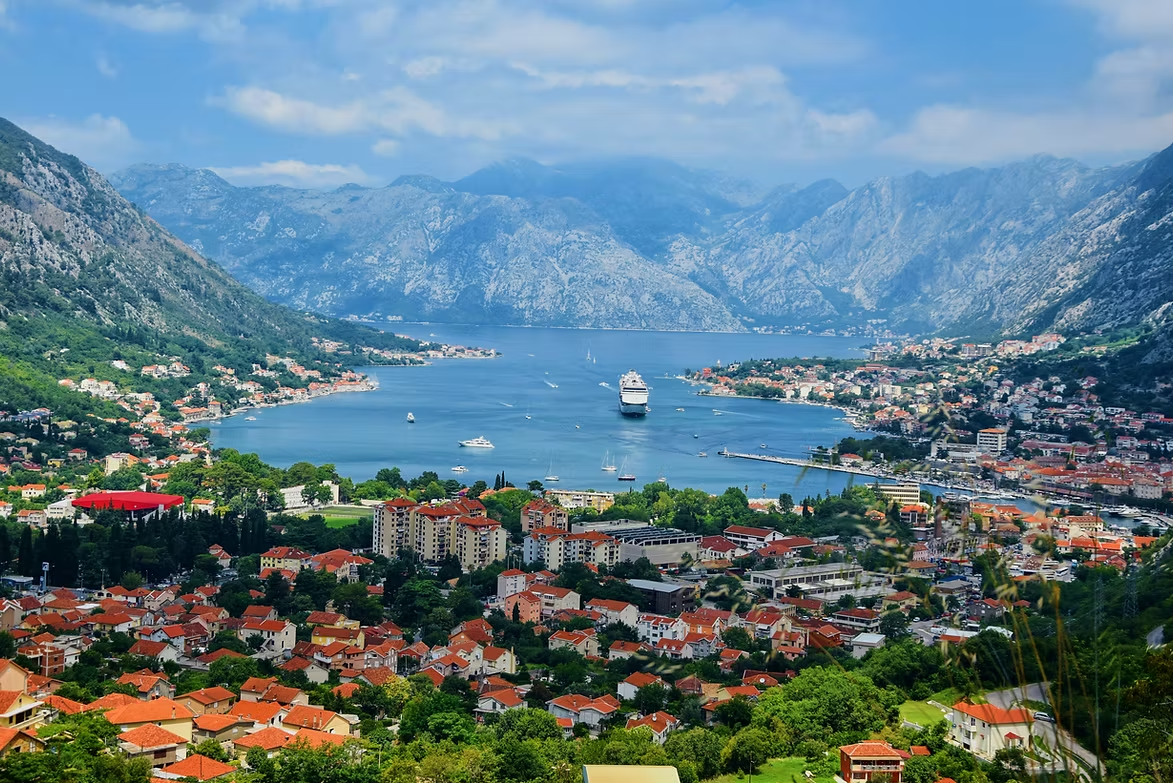
Montenegro is a destination blessed with incredible natural beauty – fjord-like bays, dramatic mountains, and a coastline that seems to be a blend of the Amalfi Coast, Dubrovnik, and the wildest corners of the Adriatic. On paper, the numbers look spectacular: record arrivals, record overnight stays, record revenues. However, the numbers themselves don't tell the whole story. Tourism isn't measured by the number of arrivals, but by the number of those who return.
On the ground – behind bar counters, in restaurants, on the streets of Budva and Kotor, in the chaos of peak season – a different story is unfolding. Guests are leaving dissatisfied. Service is inconsistent. Prices are rising faster than quality. Staff shortages are paralysing operations. The „value for money“ equation, as a key driver of loyalty, is ceasing to hold true.
This is not a crisis of beauty or potential. This is System, standards and expectations crisis. Montenegro is falling into the classic trap of rising destinations: confusing quantity with quality. If the industry doesn't correct its course, the consequences will be long-term and difficult to repair.
Red alert: A destination growing faster than its infrastructure
Montenegro's tourism boom is impressive, but growth without structure is dangerous. When a destination becomes popular too quickly, the temptation arises to maximise volume (quantity) rather than invest in quality. This is precisely what is happening: cafes and restaurants are raising prices to the level of Dubrovnik or the Amalfi Coast, while the quality of service is declining due to a shortage of trained staff, a lack of training, and inconsistent operating systems.
The guest's question is simple: „Am I getting value for my money?“ If the coffee is different every time, the service is slow, and the staff are untrained or arrogant, the answer is — no. And when the answer is negative, the tourist does not return. They go to Albania for better value, to Greece for established systems, or to Croatia for consistency. Montenegro is not losing tourists due to a lack of beauty, but due to a lack of reliability.
Why can't high prices and a drop in service go hand in hand
Price is a promise. Service is the fulfilment of that promise. When a tourist pays high prices, they expect professionalism, warmth, and a sense of being cared for – not stress, chaos, and indifference.
The current imbalance in Montenegro is unsustainable:
- Prices are rising to the level of elite European destinations.
- The quality of service is declining due to a lack of workforce and systems.
- The infrastructure is overloaded during the peak season.
- The culture of hospitality is weakening. Experienced staff are going abroad.
This creates a dangerous perception: „Montenegro is expensive, chaotic, and not worth the money.“ Once such an image spreads, it is extremely difficult to change.
The three biggest risks
- The „once and never again“ cycle: A large number of visitors looks great on reports, but if tourists don't return, the destination becomes reliant on expensive campaigns to attract new people every year. This is financially unsustainable.
- Regional competition. Passengers are not loyal to borders. If Montenegro becomes too expensive for the level of service provided, they will immediately turn to the competition (Albania, Greece, Croatia).
- Brain drain The best professionals leave for better salaries and more stable systems. Without expert staff, no amount of natural beauty can compensate for poor service.
What must agencies do to protect their brand
Agencies must not rely on flashy brochures or Instagram photos. In a high-risk destination, partners must be chosen based on service stability, not aesthetics.
- Evaluate partners on operational discipline: Do they have a permanent team? Do they train seasonal staff? Do they respond quickly to enquiries?
- Look beyond Budva and Kotor: These places are currently the least stable in terms of price and quality. Better alternatives are the north (Kolašin, Žabljak) and rural areas with authentic hospitality.
- Demand transparency in pricing and modern systems: Avoid partners operating in the grey economy; this leads to insurance problems and security risks.
- You want resilient itineraries: Focus on gastronomy, wellness, hiking and boutique experiences, which are less affected by staff shortages.
Conclusion
Quantity is not quality. Numbers are not loyalty. Arrivals are not success. Success is a returning tourist. Success is a partner who delivers. Success is a system that works – even in chaos.
For tourism experts operating in Montenegro, the way forward is clear: rigorously evaluate partners, prioritise operational stability, and leverage digital infrastructure such as Visit Mundusa How would you protect your brand and provide consistent value to your clients.


