


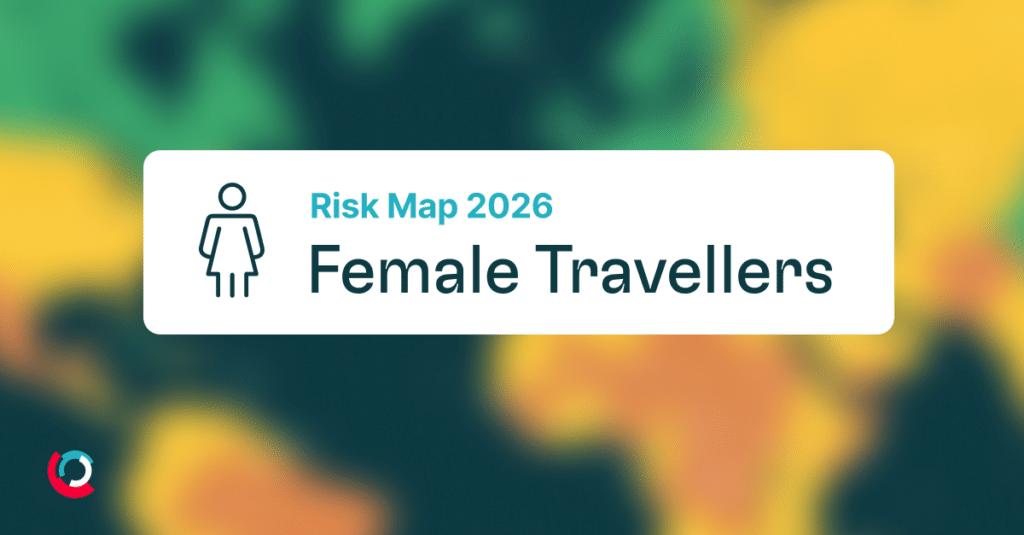
More and more women are travelling solo, but the need for security is also growing: Riskline has published its 2026 risk map.
The tourism market is undergoing an interesting transformation. An increasing number of women are deciding to travel independently, but in parallel, there is also a growing awareness of the security challenges accompanying such journeys. This is precisely the dynamic clearly shown by the new risk map for female travellers for 2026, published by the specialised company Riskline.
According to their data, solo female travel has increased by more than 60% over the past three years and now accounts for the dominant share of individual travel worldwide. Yet at the same time, a sense of insecurity is also growing. In just one year, the proportion of women who feel anxious while travelling has risen further.
This parallel growth raises an important question for the industry – how to meet the increased demand while ensuring a safer and more tailored experience for female travellers.
Where are the biggest risks
A new map for 2026 identifies almost 30 countries with elevated risk levels. Among them are destinations in Latin America such as Brazil and Mexico, parts of Asia like Afghanistan and Pakistan, as well as certain countries in Africa and the Middle East.
On the other hand, Europe as a whole continues to be perceived as a relatively safe region for female travellers. Markets such as Japan, Singapore, Canada, Australia, and New Zealand are also highlighted alongside it.
It is important to emphasise that the level of security within individual countries can vary significantly. Examples like Brazil show how crucial the local context is for risk assessment, further highlighting the importance of high-quality and timely information.
Geopolitics as a risk factor
The security picture is further complicated by global geopolitical tensions. Regions such as the Middle East and parts of Africa are experiencing the highest levels of risk, with ongoing conflicts and instability directly impacting travel planning.
For the tourism sector, this means additional operational challenges – from changes in air traffic and flight cancellations to more complex visa procedures. All of this particularly affects the individual travel segment, where travellers are more susceptible to unpredictable situations.
What does this mean for the tourist industry
For travel agencies, TMCs, and service providers, this is not just a safety issue, but also a business opportunity. The growing segment of female travellers is looking for a more personalised approach – from accommodation and transport choices to information on local customs and potential risks.
A particular challenge is seen in business travel. Although women make up the majority in the travel management segment, a large proportion of them believe that existing corporate policies still do not sufficiently address the specific safety needs of women on the road.
This opens up space for the development of new standards and services that will better respond to real market needs.
Focus on prevention and information
Riskline, in its report, stresses the importance of a proactive approach. Recommendations include careful selection of travel dates, avoiding overnight transfers, staying in secure zones, and using reliable transport options.
Digital tools that allow for more detailed monitoring of safety conditions in destinations are also becoming increasingly important. It is precisely such solutions that are becoming key to making informed decisions, both for individual travellers and for tourism professionals.
In conclusion, The growth of women's tourism is a clear trend that will continue to shape the market.. No, its sustainability will depend on the industry's ability to recognise and address specific security challenges. In this context, quality information and tailored services are no longer added value – but the expected standard.


