




Egypt in 2026: tourism keeps growing as hotel investment accelerates
Egyptian tourism continues to grow in 2026 despite geopolitical uncertainty in the region. In the first eight months of the year, Egypt received 12.7 million tourists, up from the same period in 2025, while tourism revenue reached about US$12 billion.
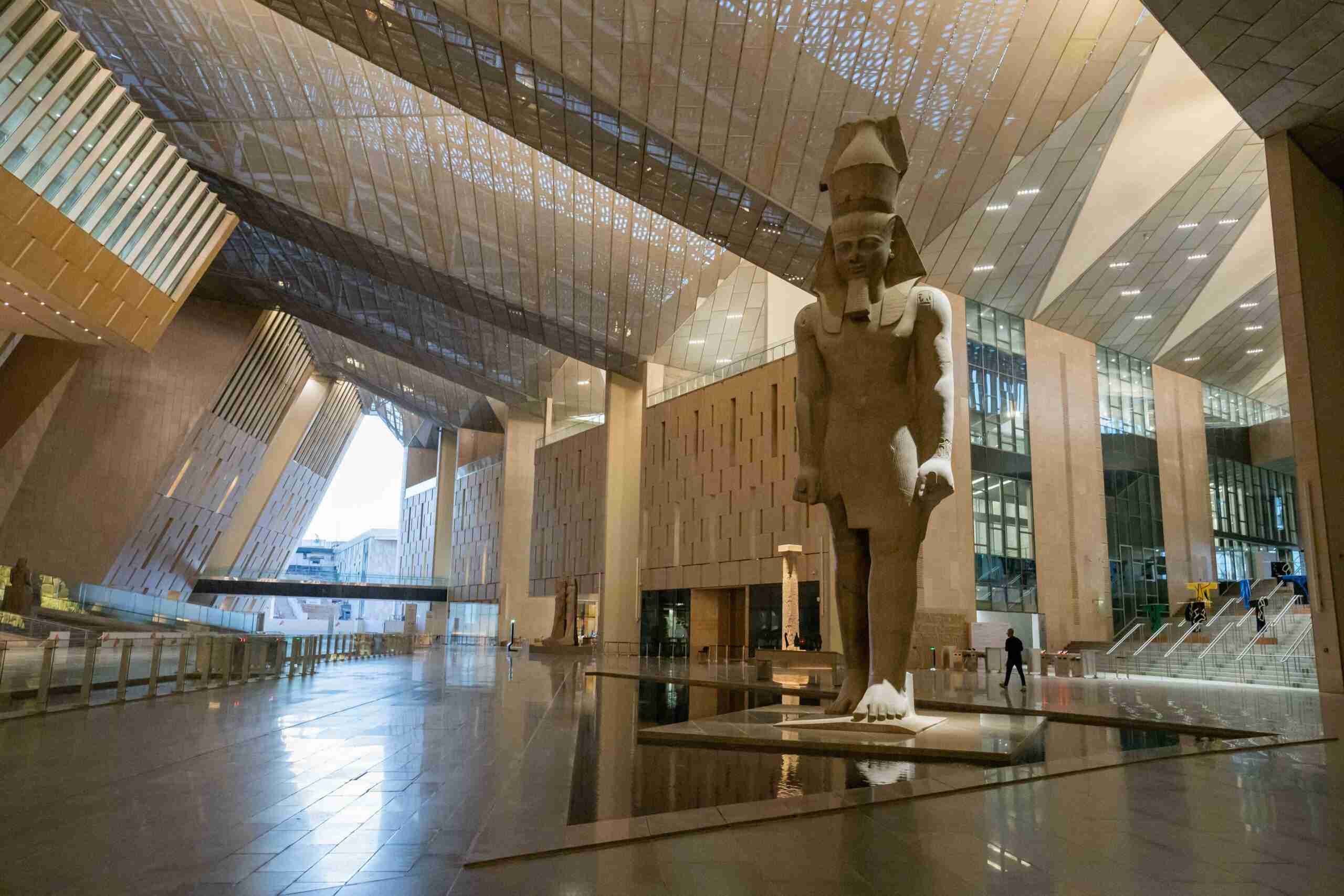
Hotel capacity development is accelerating, while the Grand Egyptian Museum has become a major attraction for Cairo and Giza since its full opening in late 2025.
For the tourism industry, the main point is that Egypt is attracting more visitors while expanding accommodation capacity, investing in cultural attractions and infrastructure, and seeking demand beyond traditional Red Sea holidays.
Egypt records further growth in tourist arrivals
According to data from the Egyptian Information and Decision Support Center (IDSC), from January to August 2026, Egypt recorded 12.7 million tourist arrivals.
The corresponding figure for 2025 was 12.2 million.
Growth has continued even after a very strong 2025, when Egypt achieved approximately 19 million international arrivals.
This is important because the result is achieved despite regional geopolitical tensions that can traditionally have a very rapid impact on demand for destinations in the eastern Mediterranean and the Middle East.
Current projections are also positive. BMI, part of Fitch Solutions, forecasts around 20.2 million tourist arrivals for the whole of 2026.
This is a forecast, not the final result of the year, but the data so far confirm the continuation of the upward trend.
Tourism revenue is growing more slowly than hotel capacity
Tourism revenue in the first eight months of 2026 was about US$12 billion, compared with approximately US$11.8 billion in the same period of 2025.
Revenue is growing, although more slowly than Egypt’s ambition to expand tourism infrastructure substantially.
Therefore, it is increasingly important for the industry to monitor not only the number of arrivals but also:
- average visitor spending
- the length of stay
- the mix of source markets
- prices of hotel accommodation
- revenue per available room
- seasonality
- share of cultural, resort and city-break tourism
According to projections published by Egypt’s IDSC, tourism revenue should continue to grow in the coming years.
This shows that the country's strategy is no longer focused solely on increasing volume, but also on increasing the overall economic value of tourism.
The largest hotel development pipeline in Africa
One of the most striking indicators of growth is found in the hotel sector.
According to W Hospitality Group, Egypt has had Africa’s largest hotel development pipeline for nine consecutive years as of 2026.
The pipeline comprises 185 projects with nearly 46,000 rooms.
For comparison:
-
- there were 109 projects with about 26,200 rooms
-
- there were 143 projects with about 33,900 rooms
-
- the total rises to 185 projects and nearly 46,000 rooms
The development pipeline must be distinguished from hotels already physically under construction.
The figure includes signed projects at different stages of development. It does not mean that all 46,000 rooms are under construction or will open soon.
However, the trend is clear: international and local hotel investors are counting on the long-term growth of the Egyptian market.
The Red Sea remains the foundation of leisure tourism
Hurghada, Sharm El Sheikh, Marsa Alam and other destinations along the Red Sea continue to be one of the foundations of the Egyptian leisure product.
Their main competitive advantage remains the combination:
- substantial resort capacity
- relatively competitive prices
- a year-round or nearly year-round season
- charter and leisure flight connections
- all-inclusive products
- diving and other activities related to the Red Sea
For European tour operators, Egypt is particularly important as a winter sun destination, when much of the Mediterranean has a limited classic resort season.
But it is precisely the strong expansion of capacity that also creates a new question: can demand grow fast enough to keep up with the number of new rooms?
If supply grows faster than demand in some markets, hotels may face greater price pressure and become more dependent on tour operators and international distribution.
The Grand Egyptian Museum strengthens Cairo and Giza’s position
One of the biggest changes compared to 2025 is the Grand Egyptian Museum (GEM).
Older analyses of Egyptian tourism described the museum as a project awaiting its opening.
That is no longer the case.
The ceremonial opening took place on November 1, 2025, and the museum was opened to the general public on November 4.
Located next to the pyramid complex in Giza, GEM combines one of the largest collections dedicated to ancient Egypt and includes a complete collection of Tutankhamun's artifacts.
For Egyptian tourism, its significance is greater than the new attraction itself.
GEM gives visitors stronger reasons to spend more time in Cairo and Giza through:
- longer stays
- an additional hotel night
- city-break programs
- cultural tours
- combining Cairo with Luxor, Aswan and the Red Sea
This can help Egypt shift part of the tourism growth from the dominant resort model towards products with higher added value.
From a resort destination to a more complex tourist product
Egypt has offered several distinct tourism products for decades.
The Red Sea is primarily based on resort and leisure tourism.
Cairo and Giza rely on cultural attractions and city-break demand.
Luxor and Aswan form the core of cultural itineraries south of the country, while Nile cruises connect much of that product.
The further development of tourism therefore does not depend solely on how many new hotels will be opened.
It is much more important how well Egypt will be able to connect these products into a single journey.
This gives tour operators and DMCs scope for more complex itineraries:
Cairo + GEM + Luxor + Nile cruise + Red Sea
rather than a conventional seven-day stay at one resort.
Such products can lengthen stays and increase total visitor spending.
What does growth mean for tour operators and travel agencies?
Egypt’s continued growth presents several opportunities for European tour operators.
The first is a larger hotel inventory.
A wider supply creates more opportunities to contract new hotels but also increases the need for sound hotel contracting and product oversight.
The second is greater scope for dynamic packaging.
Egypt is no longer solely a market for charter allotments and traditional package holidays. Growth in scheduled flight connections, bed bank inventory and API distribution enable a wider range of flight, hotel and ancillary service combinations.
The third is product diversification.
Cultural programmes, Cairo, GEM, Luxor, the Nile and the Red Sea allow agencies to build products for different customer segments.
Growth also brings risks.
Agencies must monitor:
- travel safety advisories
- changes in the visa regime
- Operational reliability of local suppliers
- quality of accommodation
- transfer arrangements
- the quality of the excursions and activities
- travel insurance terms
- Changes in aviation connectivity
In a market that is growing rapidly, the quality of the supply chain becomes just as important as the price.
Hotel growth increases the importance of distribution
Nearly 46,000 rooms in the development pipeline represent a potentially substantial future addition to hotel inventory.
Each new hotel will need distribution. Some capacity will be sold directly and some through international tour operators.
Some through OTA channels.
Some through bed banks and other B2B distributors.
For hotel groups, growth in supply increases the importance of:
- channel management
- revenue management
- direct sales
- bed-bank distribution
- tour operator contracts
- dynamic pricing
- controlling rate leakage
If the room supply continues to grow at this rate, the competition between individual resorts and hotel companies will likely become even more pronounced.
Egypt wants more than the record number of tourists
According to projections published in September 2026, Egypt could reach approximately 23.8 million tourists a year by 2030.
This is an ambitious target, but the number alone will not measure success.
For the tourism sector, it will matter more whether:
- revenue grows faster than capacity
- average spending increases
- the length of stay increases
- seasonality declines
- new hotels can achieve sustainable occupancy
- cultural attractions increase the value of the product
- infrastructure can keep pace with further growth
Egypt currently has strong momentum.
Arrivals are rising, the hotel development pipeline is Africa’s largest, and GEM has added a globally recognised attraction to an offer long built on ancient heritage and resort tourism.
The question for the coming years is not whether Egypt can attract more tourists.
It is whether this growth can be converted into greater value per visitor and a more sustainable tourism product.
Frequently asked questions
HOW MANY TOURIST ARRIVALS HAS EGYPT RECORDED IN 2026?
In the period from January to August 2026, Egypt recorded 12.7 million tourist arrivals. Current projections for the whole year suggest approximately 20 million arrivals, but the final annual result is not yet known.
Is tourism growing in Egypt?
Yes. The number of tourist arrivals in the first eight months of 2026 was higher than a year earlier, and tourism revenues also grew.
HOW MANY HOTEL PROJECTS ARE IN EGYPT’S DEVELOPMENT PIPELINE?
Egypt has 185 signed hotel projects in the development pipeline in 2026 with nearly 46,000 rooms. This does not mean that all the projects are currently physically under construction or that they will open at the same time.
Is the Great Egyptian Museum open?
Yes. The Grand Egyptian Museum officially opened on November 1, 2025, and was opened to the public on November 4, 2025.
WHY IS EGYPT IMPORTANT TO EUROPEAN TOUR OPERATORS?
Egypt combines a large hotel supply, a strong Red Sea resort product, cultural attractions, a relatively long season and good access from European source markets. It is particularly important during winter.
WILL TOURISM IN EGYPT CONTINUE TO GROW?
Current projections point to further growth, but the outcome will depend on geopolitics, air connectivity, new hotel capacity, investment and demand in key source markets.


